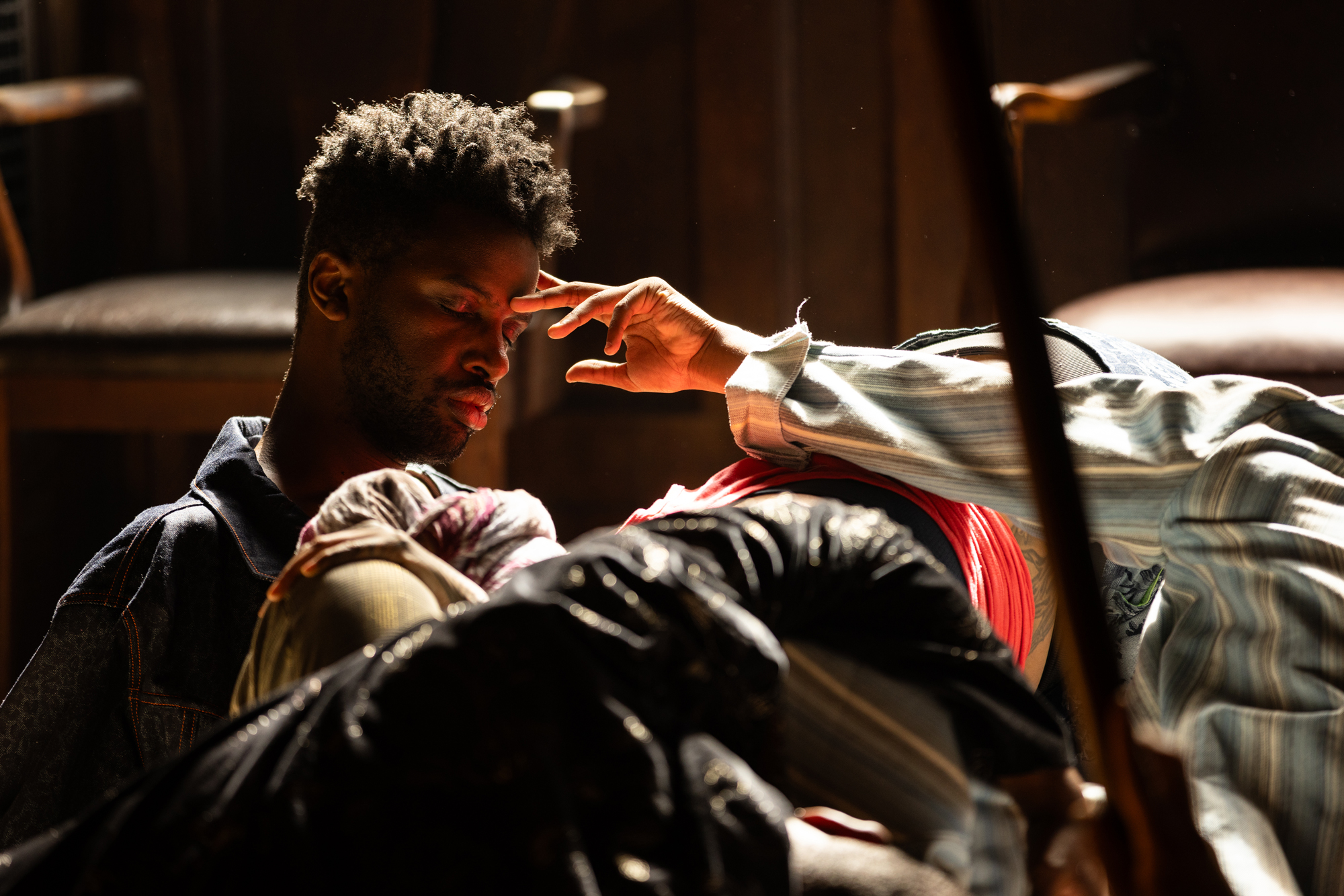
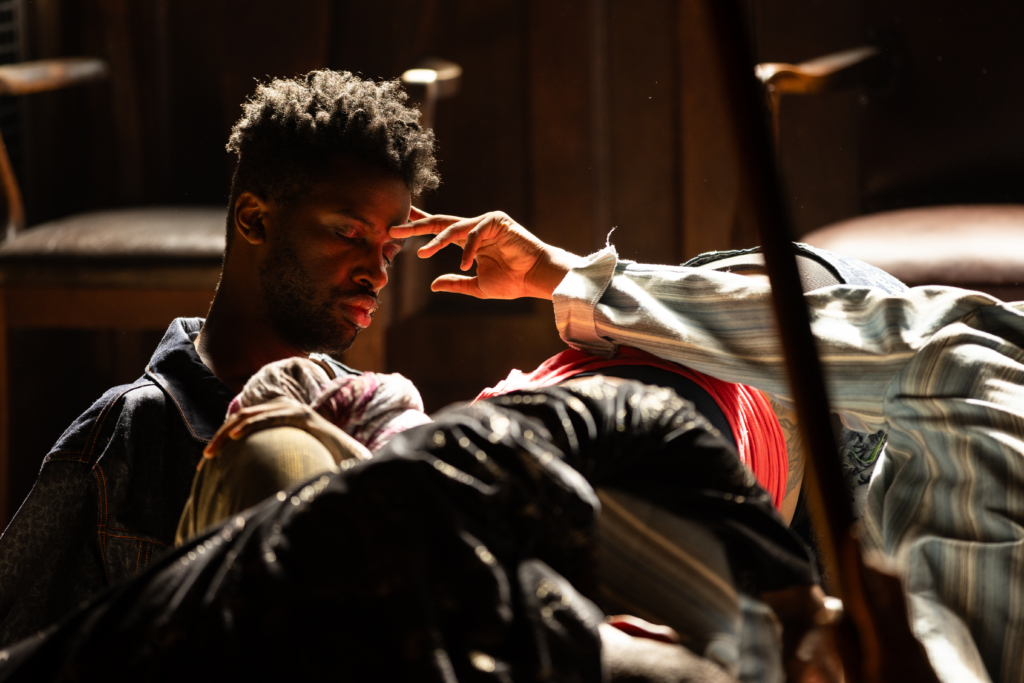
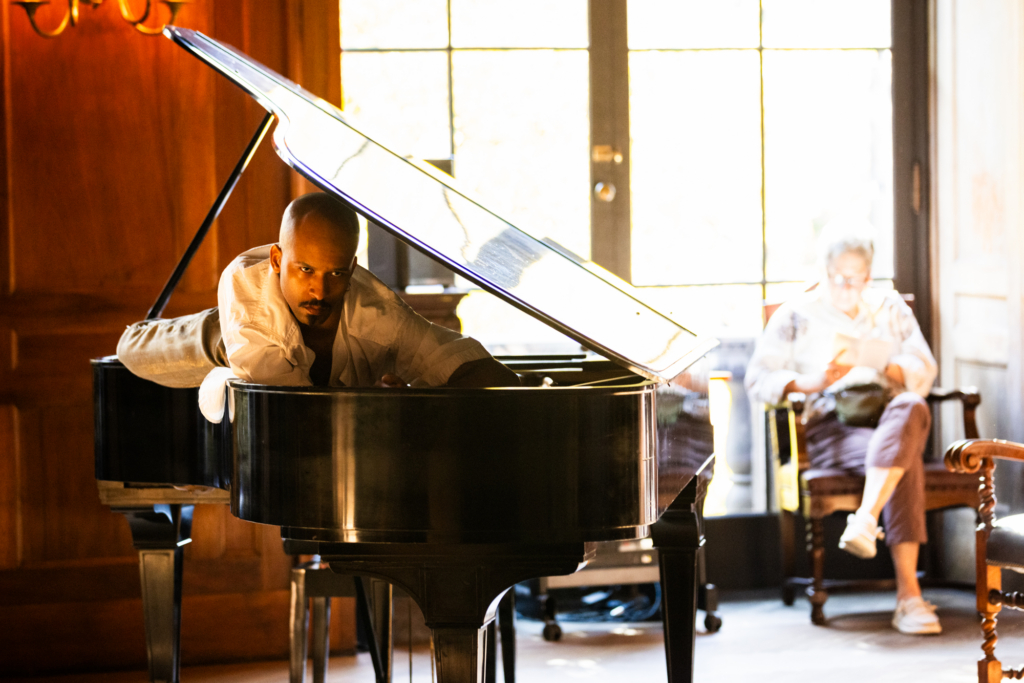
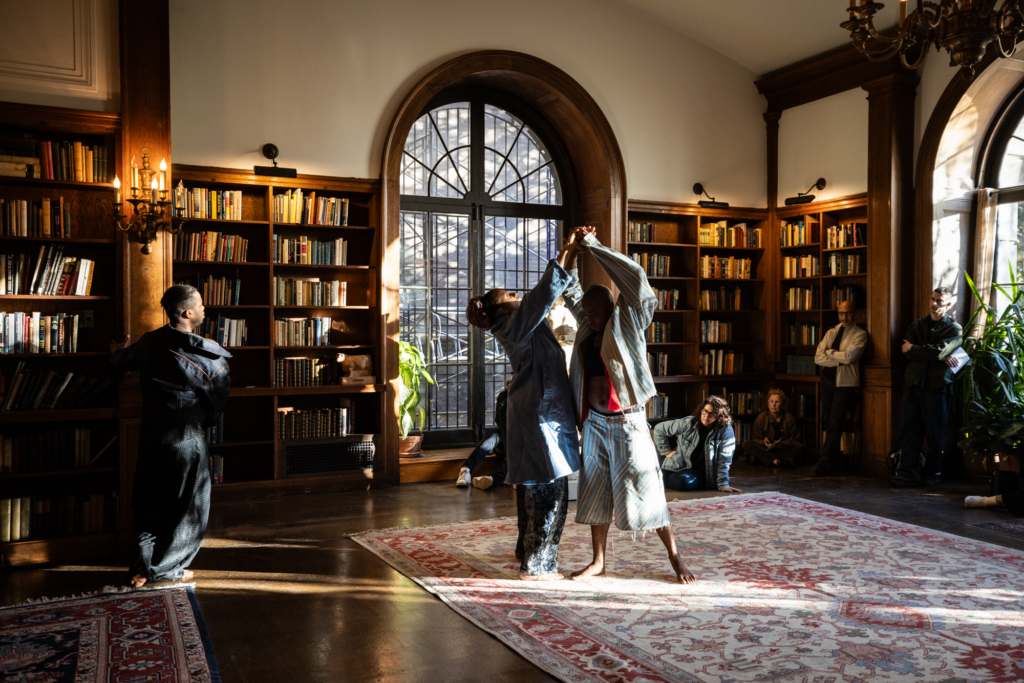
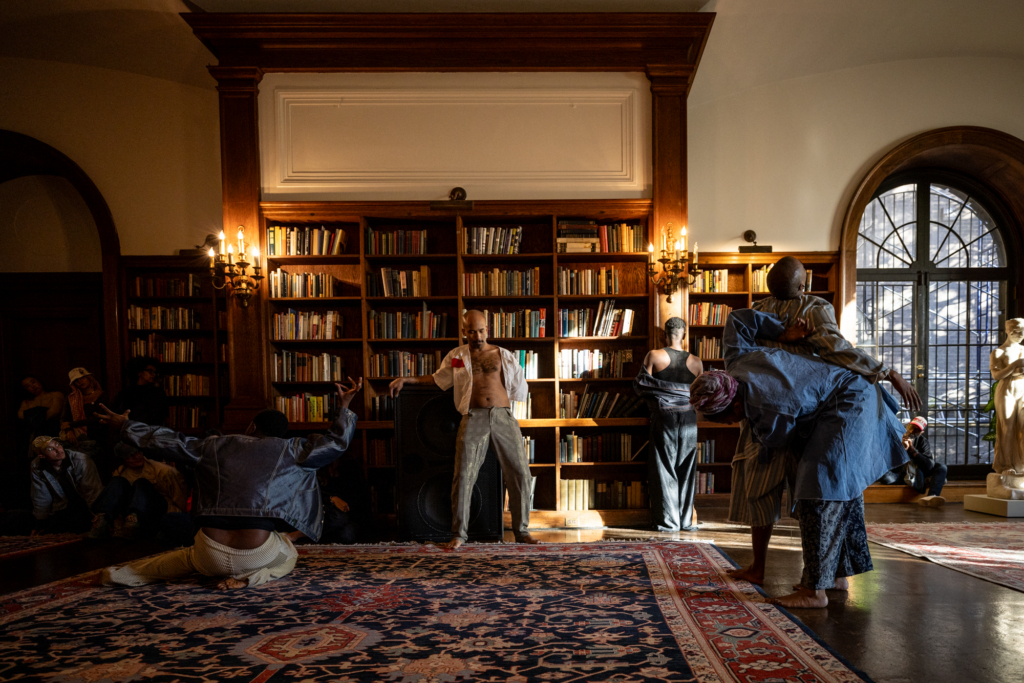
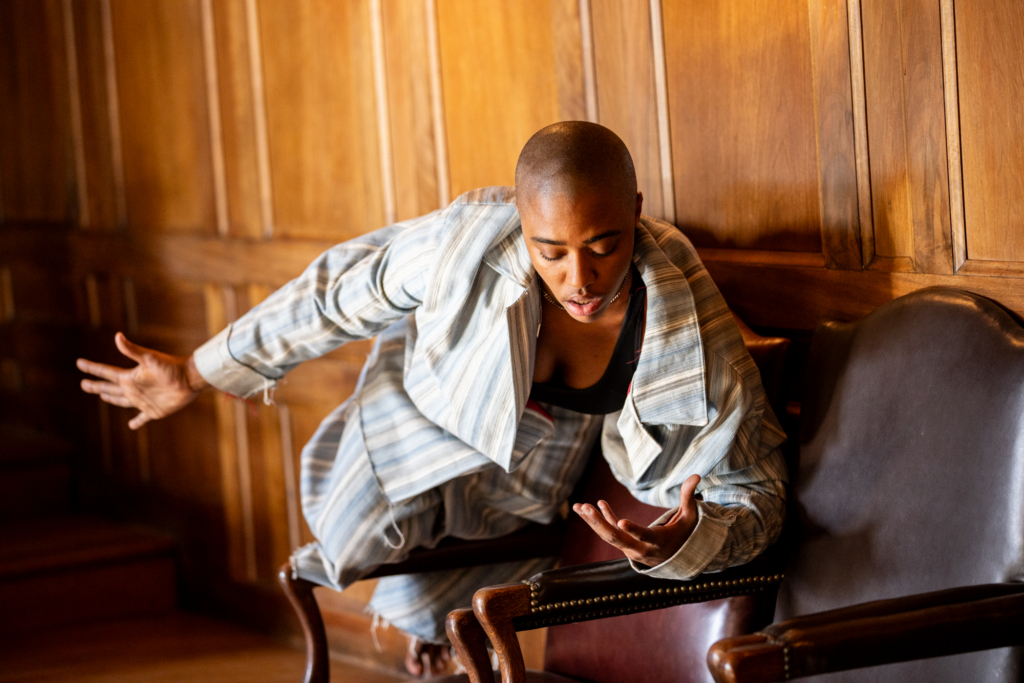
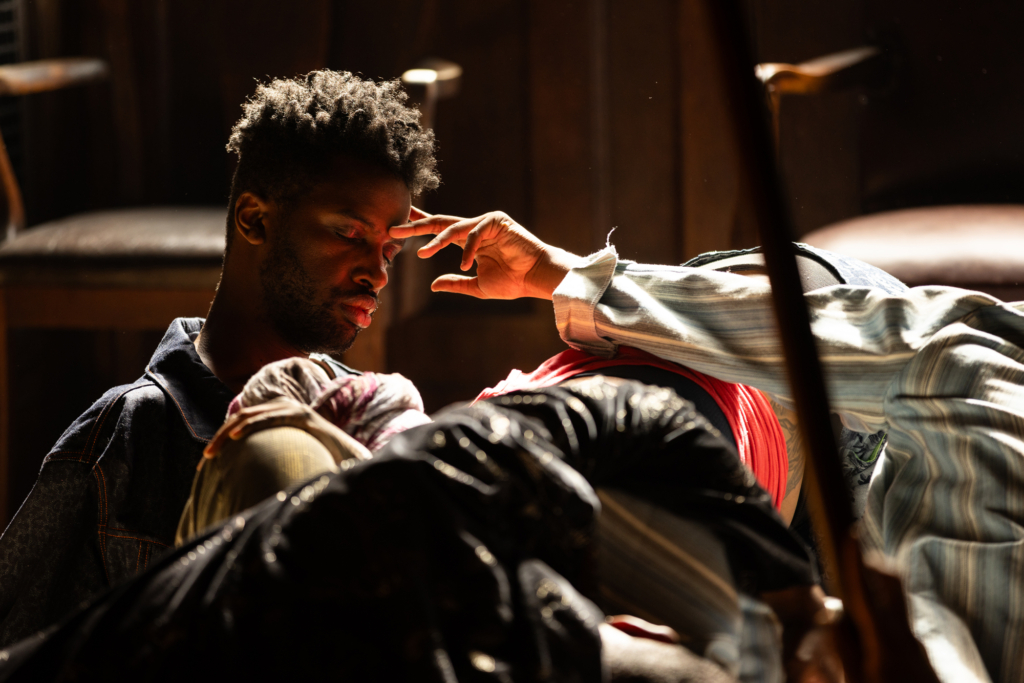
For the 59th Carnegie International, Jonathan González premiered The Strikebreakers, a site-specific, durational, performance work in the museum’s Grand Staircase. The performance took place from Friday, August 14 through Tuesday, August 18. Performed by five dancers over five consecutive days, the work unfolds as a slow transformation of bodies, relationships, and collective attention, using the museum’s architecture as both stage and collaborator.
Drawing its title from the complicated history of labor, industry, and Western Pennsylvania, The Strikebreakers does not seek to reenact a historical event. Instead, it approaches the figure of the worker as a choreographic proposition: a body shaped by repetition, endurance, care, fatigue, solidarity, and the continual negotiation between individual agency and collective responsibility. Historical archives surrounding labor movements and Black social life circulate throughout the work not as illustrations, but as conditions that quietly inform its movement, rhythm, and atmosphere. The performance is less concerned with representing history than with asking how history continues to move through bodies in the present. The title also resonates with the legacy of the 1892 Homestead Strike and the histories of labor surrounding Andrew Carnegie’s industrial empire, while opening the work toward broader questions of collective action and social choreography.
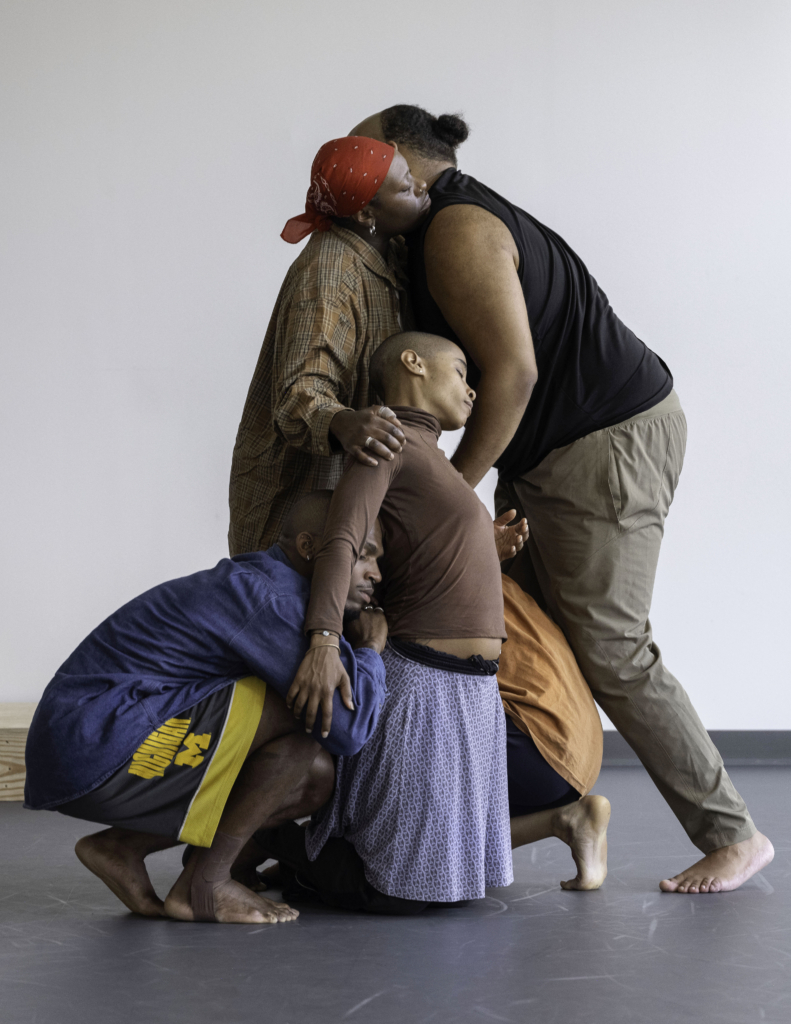
The performance unfolds across four evolving movements. It begins with a tightly compressed huddle in which five performers move as a nearly indistinguishable organism, gathering weight, breath, and attention into a shared center. Gradually, the work expands into a choreography of witnessing in which watching becomes as active as dancing. Performers continuously exchange the roles of observer and participant, suggesting that perception itself can be a form of labor and a site of collective transmission. From there, the work turns toward practices of strength. Bodies lift, brace, carry, stabilize, and sustain one another, drawing from both manual labor and contemporary training practices while resisting any singular image of productivity or virtuosity. Finally, the ensemble ascends the museum’s monumental staircase in single file, transforming the architecture into a passage rather than a destination. The ascent is neither triumph nor conclusion, but an opening onto another temporal register.
Throughout the performance, no single vantage point offers a complete experience. Visitors are encouraged to move throughout the museum, encountering the choreography from multiple elevations, distances, and angles. The work continually reorganizes itself in relation to shifting sightlines, asking audiences to become conscious of their own position within the act of looking. Architecture becomes an active participant in the choreography, shaping perception as much as movement itself.
Duration is central to the work’s form. Over four hours, time begins to loosen from the expectations of narrative or spectacle, inviting another quality of attention. Rather than building toward climax, the choreography accumulates through subtle repetition, variation, and sustained presence. As physical exertion gradually gives way to another mode of awareness, the performance proposes duration as a space where psychic, spiritual, and social experience can emerge. The unseen becomes palpable through persistence rather than revelation.
Rooted in Black performance traditions while engaging histories of the avant-garde, The Strikebreakers asks how choreography can function as a living archive: carrying memory, transmitting relation, and making visible forms of collective life that often remain just beyond perception. The work ultimately proposes the museum not as a container for completed history, but as a place where bodies, architecture, archives, and audiences continually remake one another through the shared experience of time.
The Strikebreakers Production Credits
Artist/Choreographer: Jonathan González
Performers: Anya Clarke-Verdery, Anya Susan Collins, Cory Seals, Donovan Reed, and Jasmine Hearn
Curator: Danielle A. Jackson
Producers: Greta Hartenstein and Nora Chellew
Costume Designer: Liz Prince
Costume Assistant: Genevieve Chiappetta