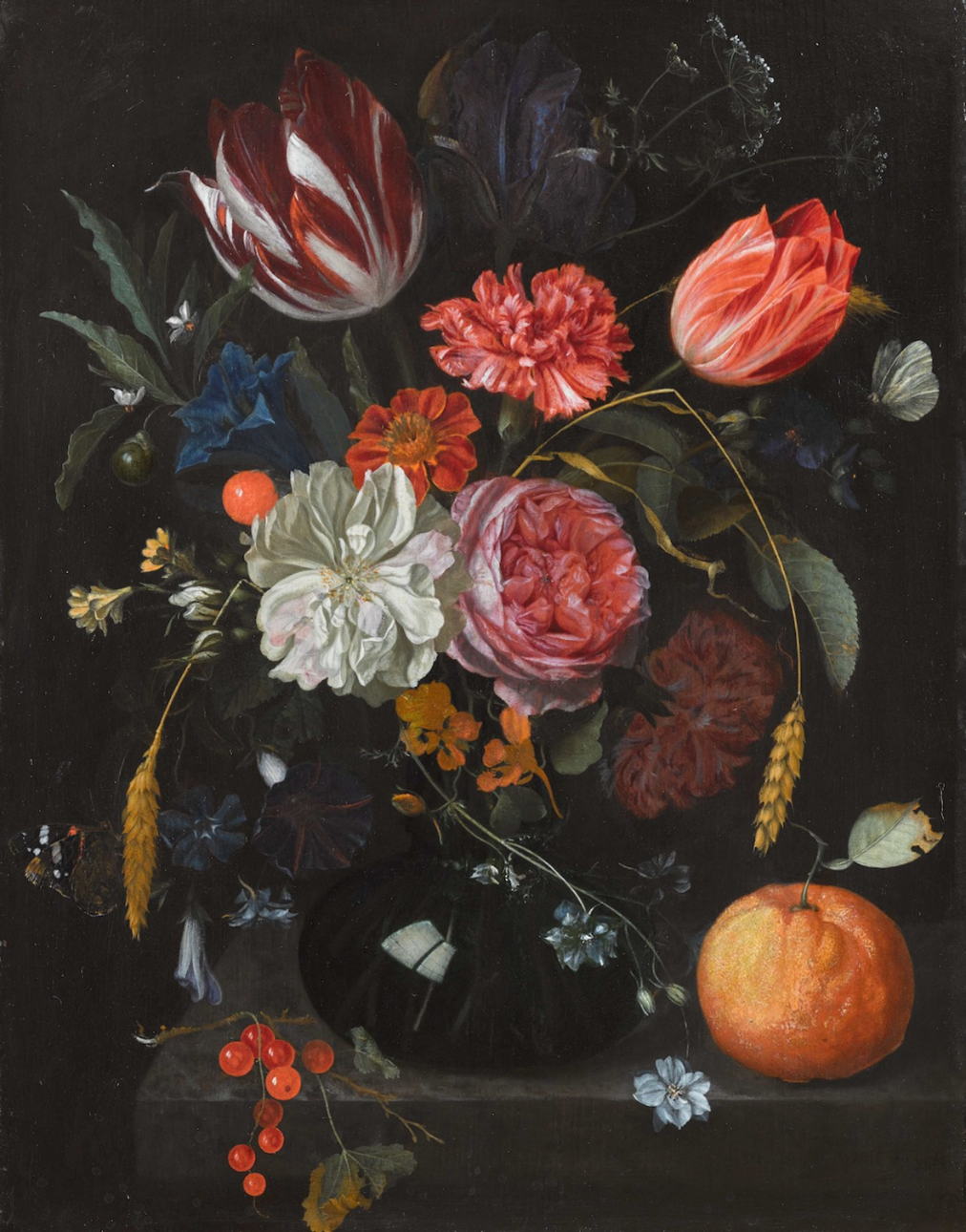
Maria van Oosterwijck (born 1630, Nootdrop, Netherlands; died 1693, Uitdam, Netherlands) painted still lifes that captured the admiration of artists, intellectuals, and European courts alike. Featuring fragrant roses, luscious berries, unusual shells, and inconspicuous insects, her paintings reveal a creative practice at the intersection of close observation and imagination, connecting the local artistic and scientific networks of Amsterdam and Leiden, where van Oosterwijck lived, to the far reaches of the 17th-century Dutch imperial world.
With fewer than 40 works known today, paintings by van Oosterwijck are exceedingly rare. Carnegie Museum of Art’s recent acquisition of Still life of tulips, roses, a carnation and other flowers inspired the museum’s in-depth exploration of the artist’s creative practice. Maria van Oosterwijck is the first comprehensive presentation of her work and legacy. Drawing from new research, it brings together for the first time her most important paintings from public and private collections.
This exhibition is organized by Dr. Marie-Stéphanie Delamaire, Curator of European and American Art at Carnegie Museum of Art, with Dr. Emily Na, Research Associate.