In this episode, photographer Clinton Wright talks about what it was like to move to and photograph Las Vegas in the 1960s and 70s, a time when many casinos were still segregated. Aaron Mayes and Claytee White, who work with Wright’s archive at the UNLV Libraries Special Collection help situate these photographs within the historical context of Civil Rights activism in Las Vegas.
Black Photojournalism Episode 3: Las Vegas
Podcasts
Nov. 19, 2025
Contributors in this Episode
A fifth-generation Nevadan, Aaron Mayes is the Curator for Visual Materials in UNLV Libraries Special Collections. He is also a photographer who documents Southern Nevada, its built and natural environments, and the people who call it home. Mayes began his career as a photojournalist for the Henderson Home News and Las Vegas Sun, before working as UNLV’s university photographer documenting life on campus. In his role as Curator for Visual Materials he is responsible for growing the Special Collections’ archive by creating and collecting photographs, as well as providing technical expertise for digitization efforts. Mayes’ work has been seen in many national and international publications and in local media outlets.
Born in Altheimer, Arkansas, in 1940, Clinton Wright attended the University of Arkansas, where he studied industrial and mechanical education. He moved to Las Vegas in 1959 and began to work as a photographer for the Black newspaper Las Vegas Voice. Wright documented celebrity weddings and photographed Black entertainers when they visited Las Vegas, including Sammy Davis Jr. and Bill Cosby. His photographs serve as a record of Black life in Las Vegas in the 1960s and 1970s, including the historic Black neighborhood of Westside and the dramatic changes taking place during the civil rights era.His photographs were featured prominently in the 2017 PBS documentary African Americans: The Las Vegas Experience. An archive of Wright’s photographic work from 1964 to 1971, as well as oral history interviews, are kept at the University of Las Vegas Libraries Special Collections.
Claytee D. White is the inaugural director of the Oral History Research Center at UNLV Libraries. In this position, she collects the history of Las Vegas and the surrounding area by gathering memories of events and experiences from long-time residents. White received her Bachelor of Arts degree in social work from California State University Los Angeles, a Master of Arts degree in history from the University of Nevada Las Vegas, and engaged in additional graduate work at the College of William and Mary. In 2025 she became a Distinguish Nevadan and was granted an honorary Doctorate Degree in Humane Letters. A native of Ahoskie, North Carolina, White is a member of the national Oral History Association, past president of the Southwest Oral History Association, former Chair of the Las Vegas Historic Preservation Commission, and serves on Boards for BlackPast.Org, The Mob Museum, Women of Diversity, and the Obodo Collective.
Ilayna Utley and Kurtran Wright are Clinton Wright’s children. Utley is a commercial property management professional in the Dallas/Fort Worth area. Wright is a Missional Pastor at One Community Church, Plano, Texas.
More Episodes View All →
About Black Photojournalism
Sept. 13, 2025–Jan. 19, 2026
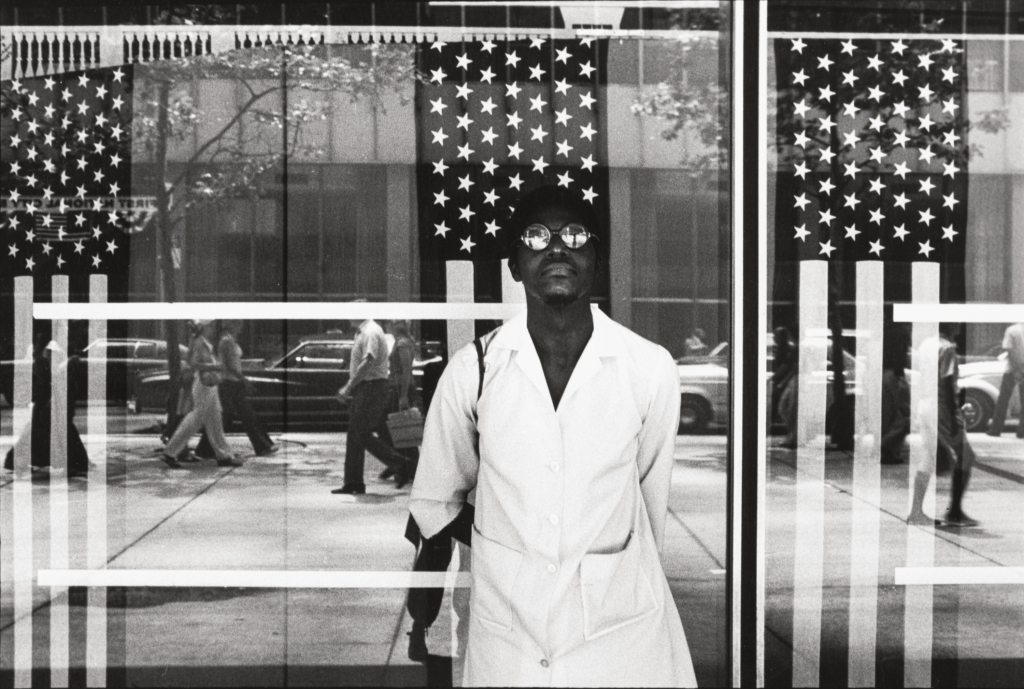
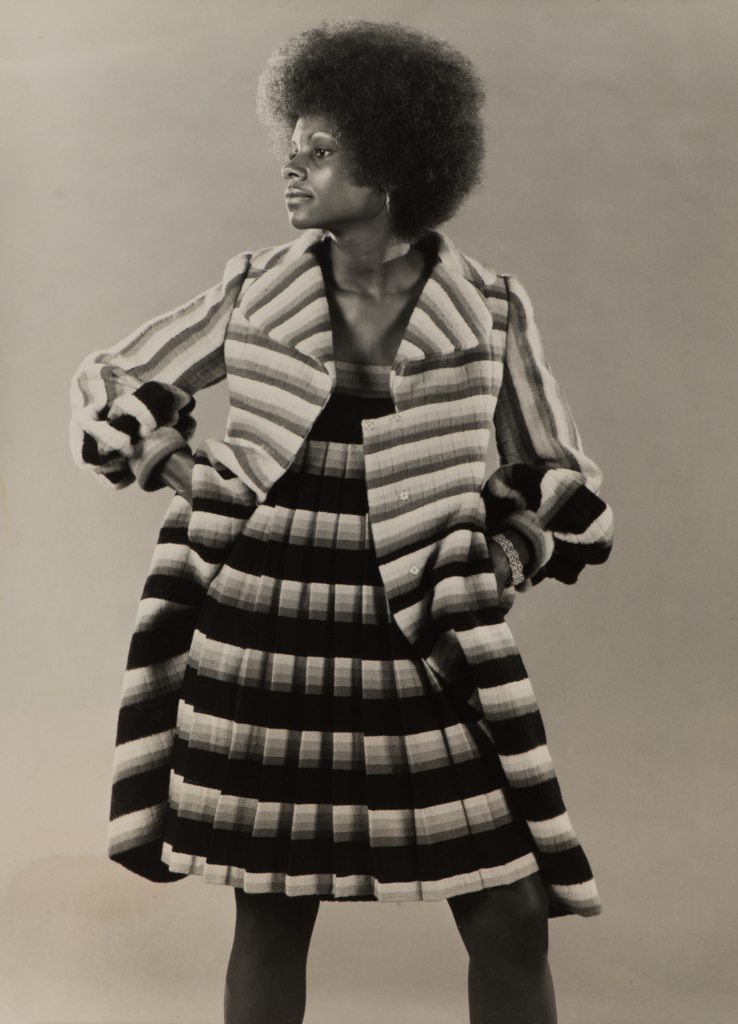
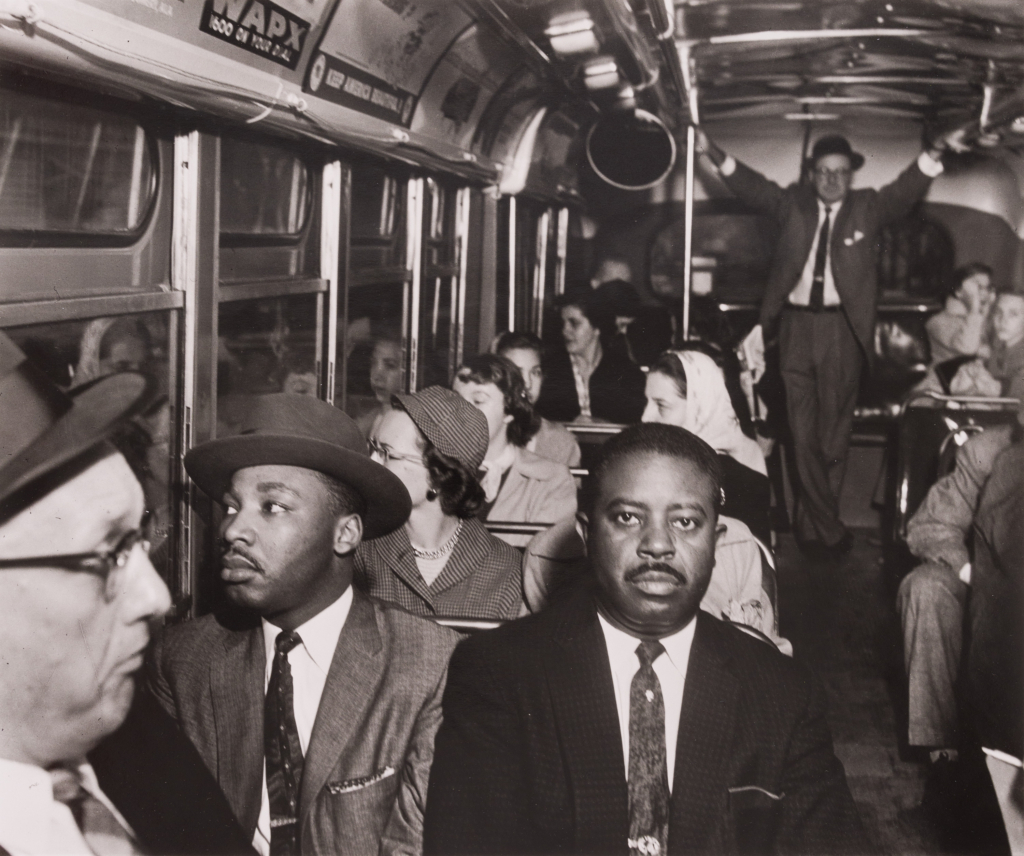
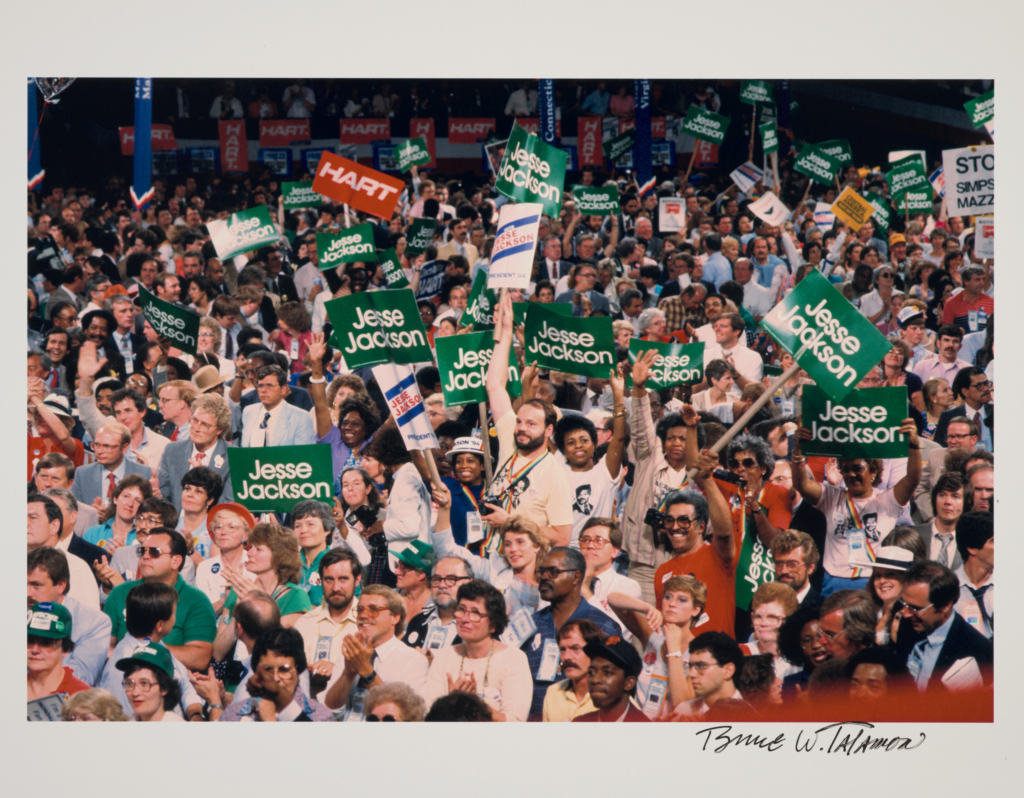
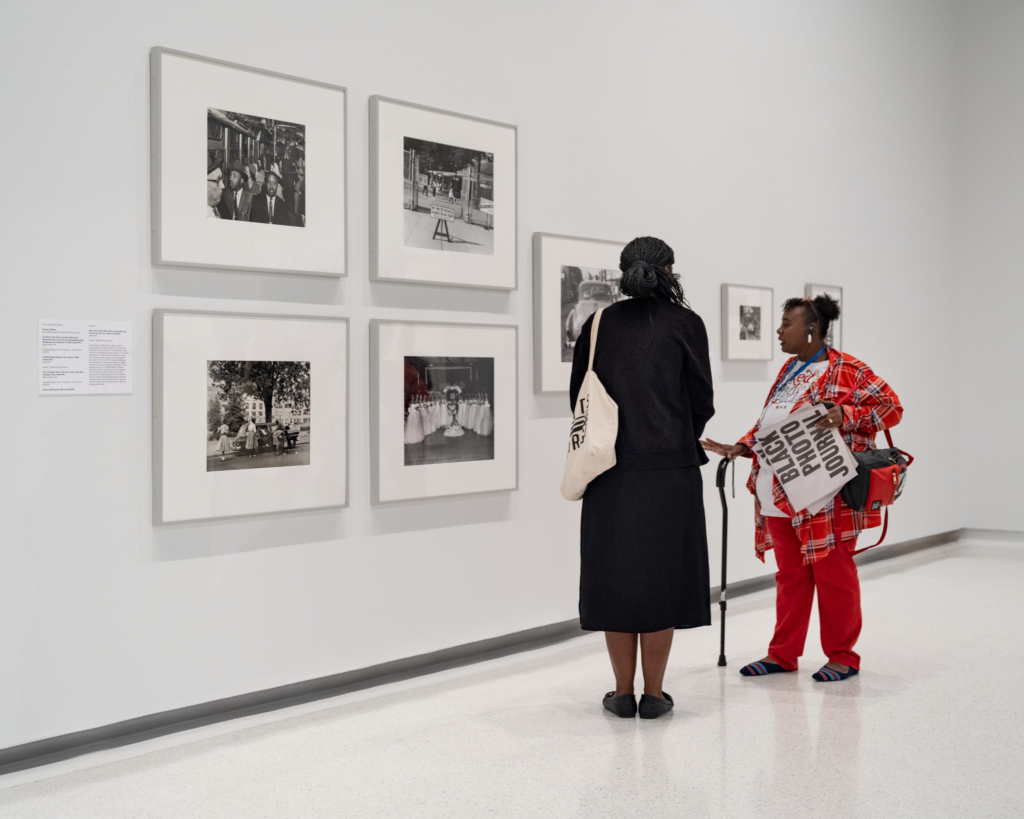
Black Photojournalism presents work by more than 40 photographers chronicling historic events and daily life in the United States from the conclusion of World War II in 1945 to the presidential campaigns of 1984, including the civil rights movements through the 1950s, 60s, and 70s.
Credits
Black Photojournalism is co-organized by Dan Leers, curator of photography, and Charlene Foggie-Barnett, Charles “Teenie” Harris community archivist, in dialogue with an expanded network of scholars, archivists, curators, and historians.
The Black Photojournalism podcast series is produced by SandenWolff, Inc.
Executive Producer, Writer, Story Editor: Rachel Wolff
Editing: Thomas Lange and Jonathan Sanden
Original music: Noah Therrien
Support
Black Photojournalism is presented by BNY.
Major support for this exhibition has been provided by the Virginia Kaufman Endowment. Significant support for this exhibition has been provided by the Terra Foundation for American Art.
Black Photojournalism has been made possible in part by a major grant from the National Endowment for the Humanities: Democracy demands wisdom.
Support for this exhibition’s catalogue has been provided by Arts, Equity, & Education FundTM, the Wyeth Foundation for American Art, and John Bauerlein.
In-kind support for this exhibition has been provided by Herman Miller.
Carnegie Museum of Art’s exhibition program is supported by the Carnegie Museum of Art Exhibition Fund and The Fellows of Carnegie Museum of Art.
Carnegie Museum of Art is supported by The Heinz Endowments and Allegheny Regional Asset District. Carnegie Museum of Art receives state arts funding support through a grant from the Pennsylvania Council on the Arts, a state agency funded by the Commonwealth of Pennsylvania.
Any views, findings, conclusions, or recommendations expressed in this exhibition do not necessarily represent those of the National Endowment for the Humanities.