Whether you have experienced domestic violence, are currently experiencing domestic violence, are a child witness, are trying to support a survivor or just learn more, art can be a companion of healing on your journey.
This self-guided tour can be done by yourself or with others. There is no right or wrong way. We have developed contemplative prompts for each artwork; these can be explored through conversation, writing, or internally. We encourage you to experience this through the lens of a domestic violence victim/survivor, or through your own experience as related to domestic violence. You may also find other works that speak to a survivor’s journey that are outside of this curated list of artworks feel free to overlay the prompts on those, as well.
When exploring these artworks, we invite you to use the “SELF” Framework. SELF is from The Sanctuary Model, an internationally respected model used to provide trauma-informed care to create a safe, healing environment for clients and staff. SELF stands for safety, emotion management, loss and future. As you tour these artworks please consider each of these aspects:
- Safety: Creating a space safe from physical, emotional, and moral abuse
- Emotion management: Understanding how feelings such as fear, sadness, and anger teach us about ourselves and how to manage them in healthy ways
- Loss: Recognizing and feeling grief as it relates to domestic violence and trauma
- Future: Imagining life after a personal history of abuse and trauma
Locating Centers, Sadie Benning
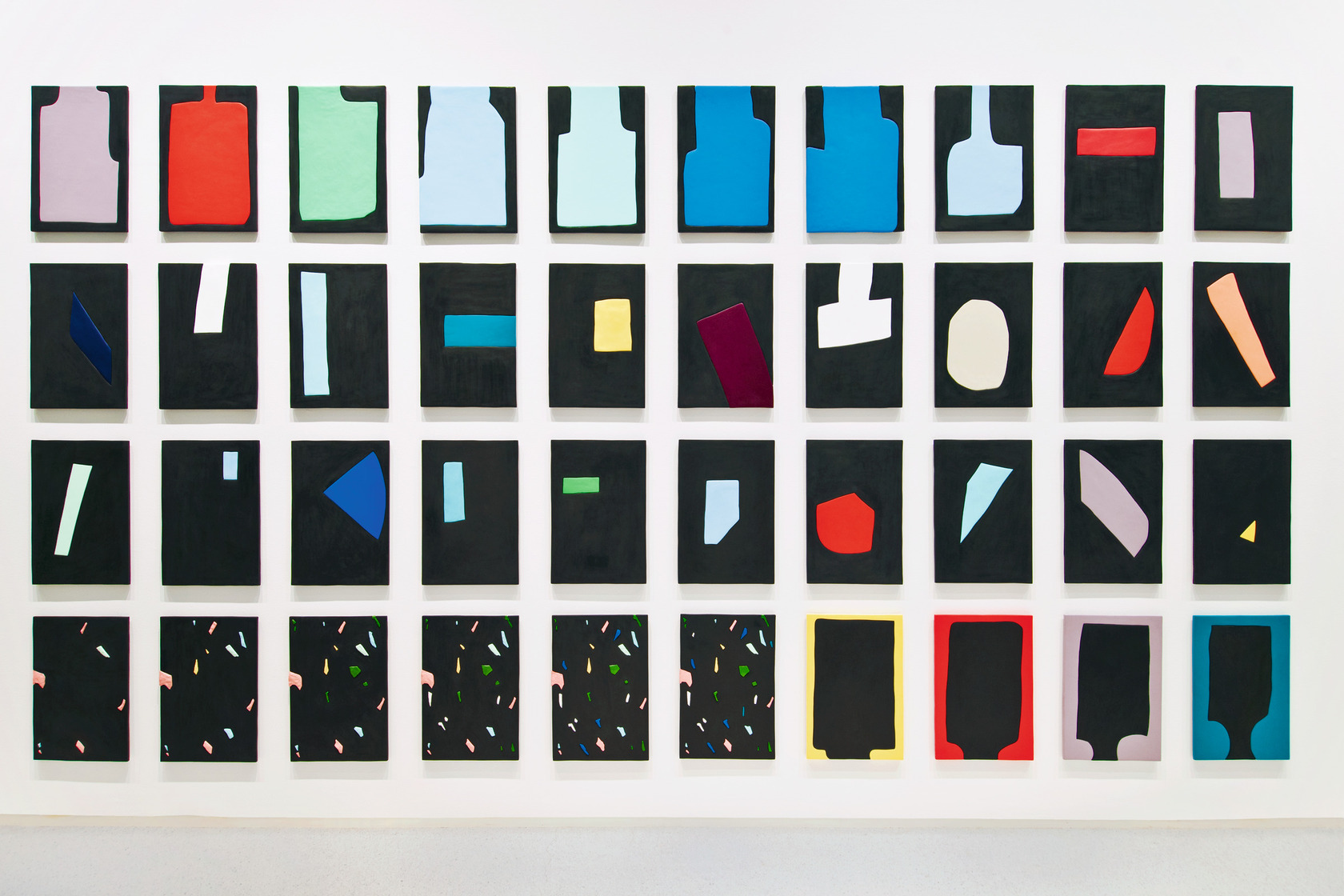
“I want people to bring something of their own to it, to wonder what something actually is.”
—Sadie Benning
Prompts
- Grounding with the artwork: What do you observe in this artwork? What are wondering about this artwork?
- Safety: This artwork isolates different gestures, or movements from the body. When you feel unsafe, where do you feel it in your body? Which part of your body would you isolate to center yourself?
- Emotion management: What feelings do you have when you observe this artwork? What stands out to you? Looking at each panel/section, what emotion would you connect with each one?
- Loss: What, if anything, in this piece expresses loss or grief?
- Future: Which section/panel within this artwork communicates where you are right now? Which section/panel are you reaching toward? Is there a panel/section you would add—and can you express it through your body or a drawing, what color would it be?
Throughlines
- Overlapping multiplicities
- Gestures
- Operating off-center
- Narrative
- Consciousness space / creative mind space
- No resolution
- Metamorphosis
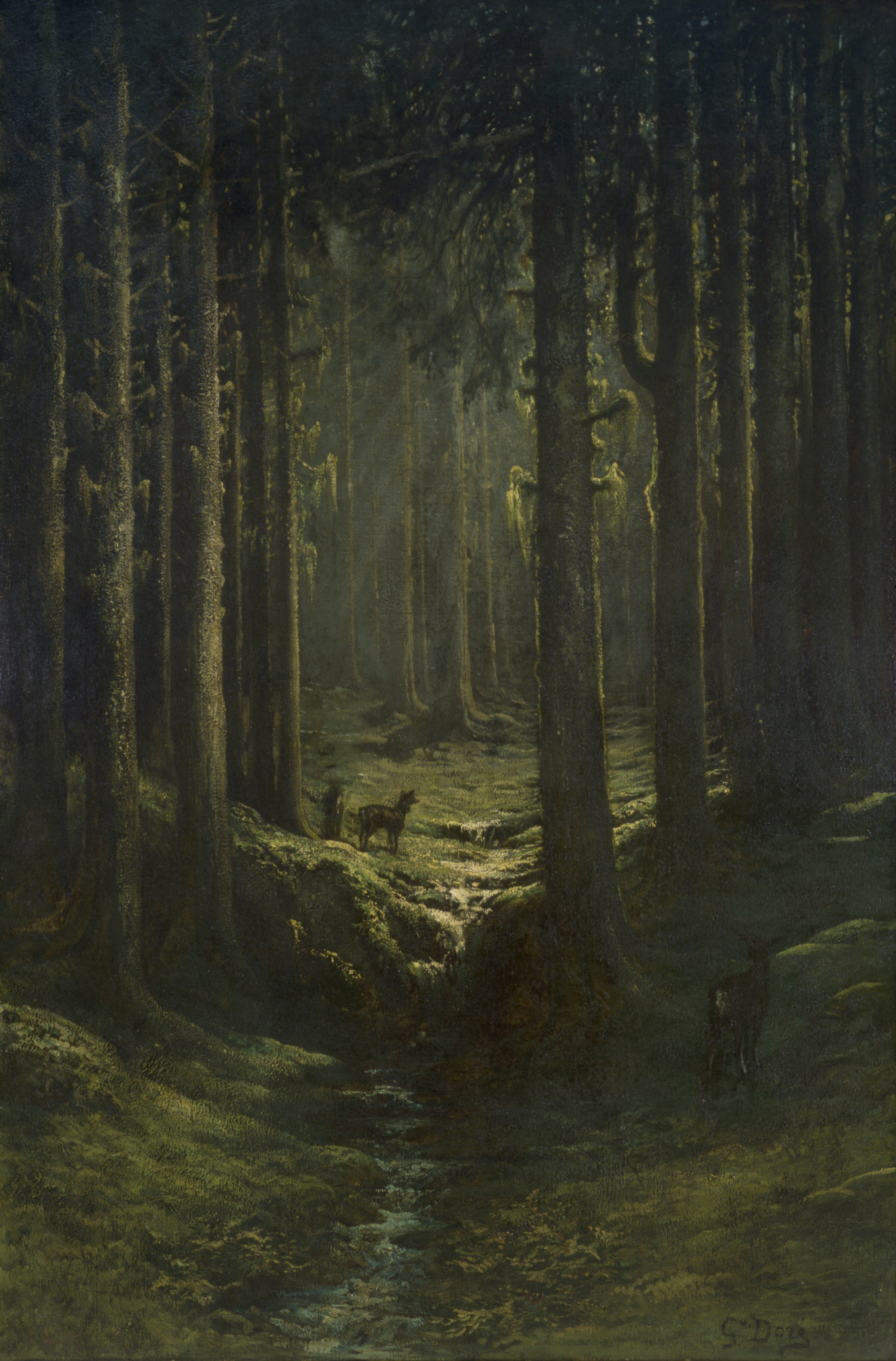
Deer in a Pine Forest (Vosges), Gustave Doré
Prompts
- Grounding with the artwork: What do you observe in this artwork? What are you wondering about in this artwork?
- Safety: Inserting yourself in this painting as a survivor, do you feel safe? If so, why? If not, why not?
- If this painting were a still in a movie, and you were its viewer, what would happen next in this scene?
- Emotion: Place yourself in this painting— how do you feel? Where would you be and how would your senses be engaged? What is the temperature of the air? What do you see, hear, smell, touch, feel, taste? Who else would you bring into this painting with you, and how does it change what it feels like to be there?
- Future: What would you add or alter in this painting to create a place where you want to be?
Throughlines
- Nature
- Contemplation
- Calm before the storm
- Hunter / prey
Prisoner of Love #1 (Second Version), Glenn Ligon
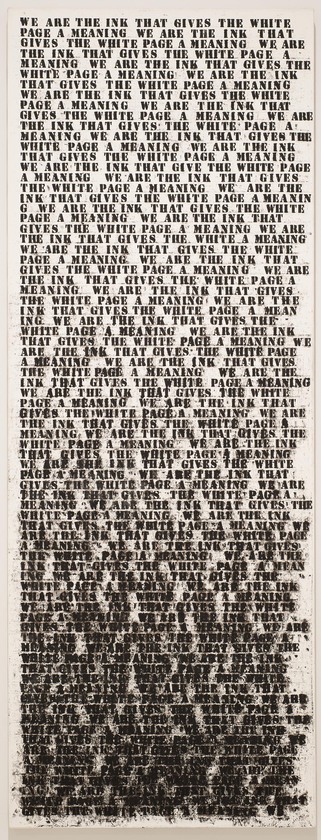
“So much of my work has been about disappearing.”
“Rather than say art is art and life is life, I like to say that they’re joined and inextricable.”
—Glenn Ligon
Prompts
- Grounding with the artwork: What do you observe in this artwork? What are you wondering about in this artwork?
- Safety: Who is your “we” right now? Who are the people you think of as your people?
- Loss: On your survivor journey, what may be blurring your sense of self—your ability to see yourself?
- Future: When do you feel most visible? What are the conditions necessary for you to feel seen?
- Write down three aspects of yourself that others see in you.
- Write down three aspects you see in yourself.
- Write down three aspects you hope for.
- Look at those nine words. Decide which ones you want to keep and which to let go. Write down the ones you want to keep and repeat them until they fill the page.
Throughlines
- Text
- Words
- Meaning of words
- Narrative
- Identity
- Disappearing
- Treaties
Untitled (Gibbet Island), Cy Gavin
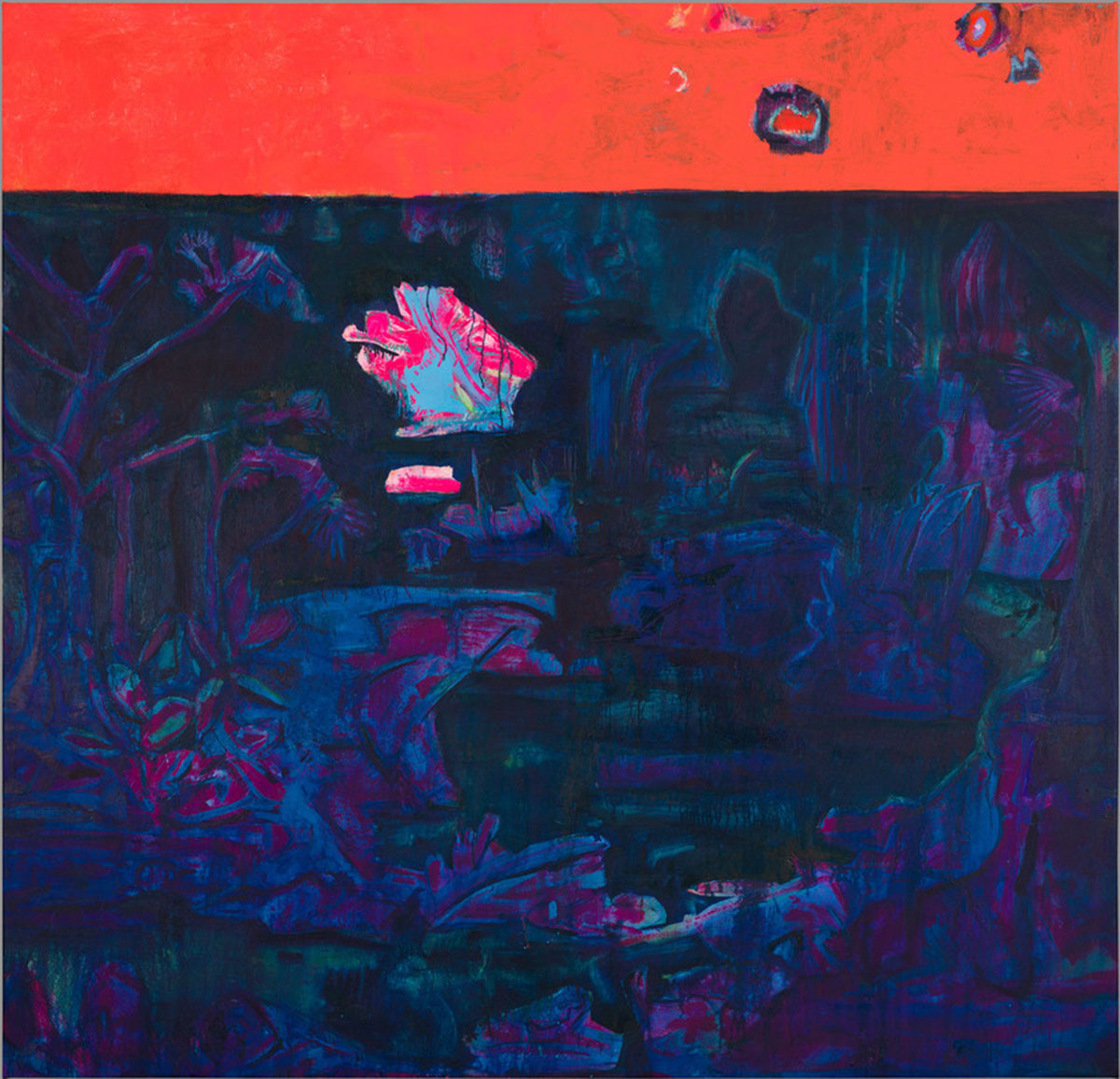
“I don’t want my work to be predetermined and static. I want there to be space for the painting to assert itself.”
—Cy Gavin
Prompts
- Grounding with the artwork: What do you observe in this artwork? What are you wondering about in this artwork?
- Safety: What color is on your surface right now? If you peeled away that color, what would you find? And beneath that?
- Emotion: What kind of landscape do you see in this painting? Where in your world might it be? What time of your life have you been in this landscape?
- Future: Focus on the light in this painting. What do you see as light? What light are you moving toward right now? How can you be a light for someone experiencing domestic violence?
Throughlines
- Exploration
- Emotional landscape
- Horizon
- Layers
- Abstraction
Armoire, Doris Salcedo
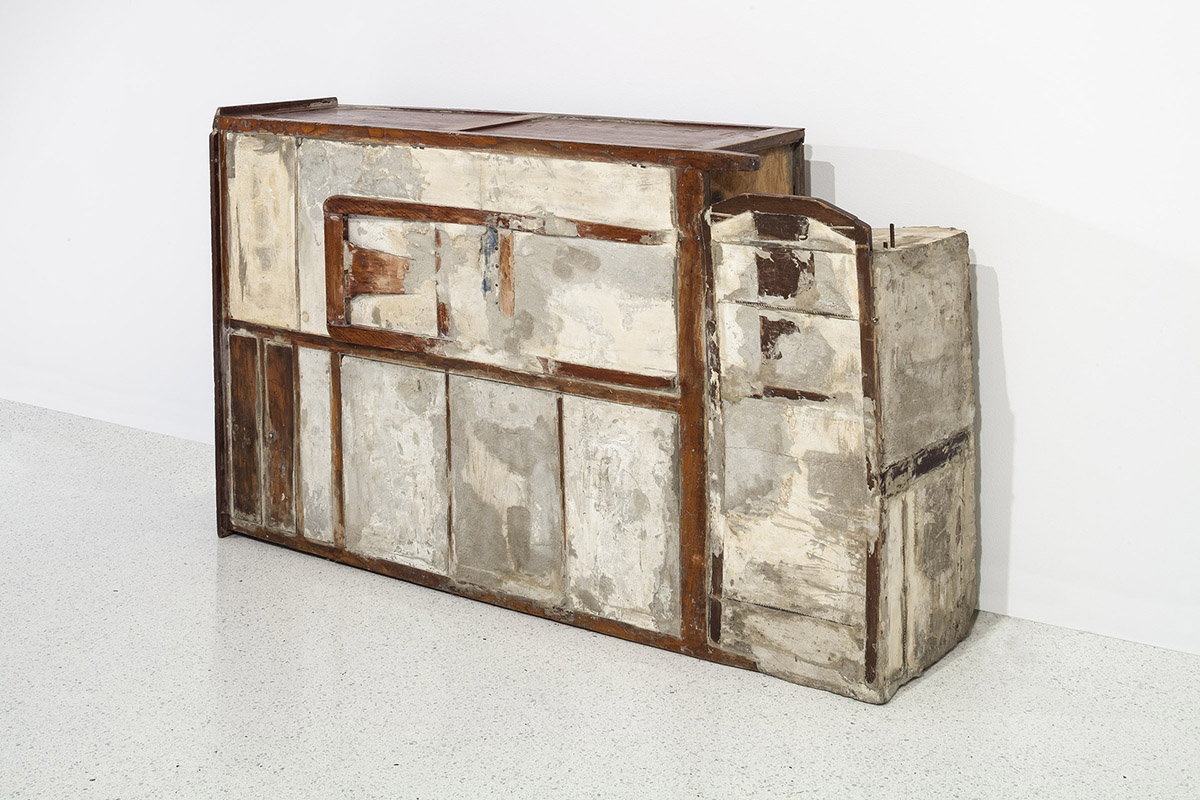
“Art cannot explain things, but it can expose them.”
“A human being is far more than a body. It’s all the connections, it’s all the relationships, it’s the space they take up in the world—everything that a complete life could give.”
—Doris Salcedo
Prompts
- Grounding with the artwork: What do you observe in this artwork? What are you wondering about in this artwork? What shapes do you see within this solid form?
- Emotion management: What tangible or spiritual items are you carrying with you on your healing journey? How do you feel carrying them – are they heavy? Light?
- Safety: Which items are you carrying that create a feeling of security? Do any make you feel the loss of a sense of physical, emotional, or moral safety?
- Future: What items have you been trying to let go of but feel cemented? Do you know how you might free yourself of them?
- Loss: Draw or write the names of items that represent your grief. How would you cement them in a context of healing? What shape do they form together?
Throughlines
- History
- Loss
- Catharsis
- Mourning / grief
- Remembrance
Upturned House, Phyllida Barlow
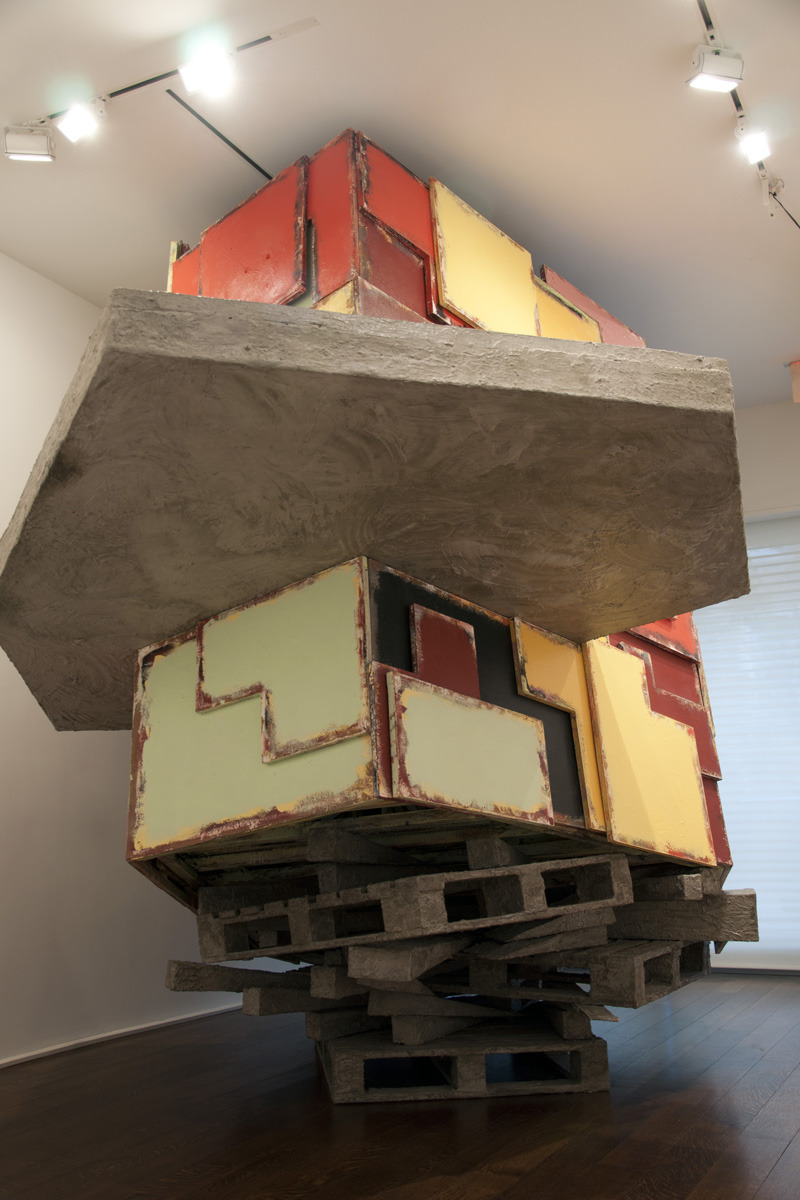
“It’s the notion of gravity pulling on things, making things collapse… there is a tragedy, a triumph, a beauty, and also an immense grief.”
“I like to use chance to allow accidents or mistakes to become a part of what I’m doing. It’s work at its most vulnerable and therefore I am at my most vulnerable.”
—Phyllida Barlow
Prompts
- Grounding with the artwork: What do you observe in this artwork? What are you wondering about in this artwork?
- Safety: How do you describe the precarity within this artwork? Its balance? What elements allow for both?
- Emotion: How do you ground yourself when you feel precarious? What is the shape, texture, and weight of your foundation? How do you describe your home right now?
- Loss: What elements make your house (physical) or home (emotional) feel out of balance? What brings balance?
- Future: What would the upturned house need to feel like a home you could inhabit? Where would the windows, doors, and roof be?
Throughlines
- Taking up space
- Catharsis
- Being a monument
- Assertiveness
- Self-care
- Diversity
- Balance / tension
My Caldera, Cauleen Smith
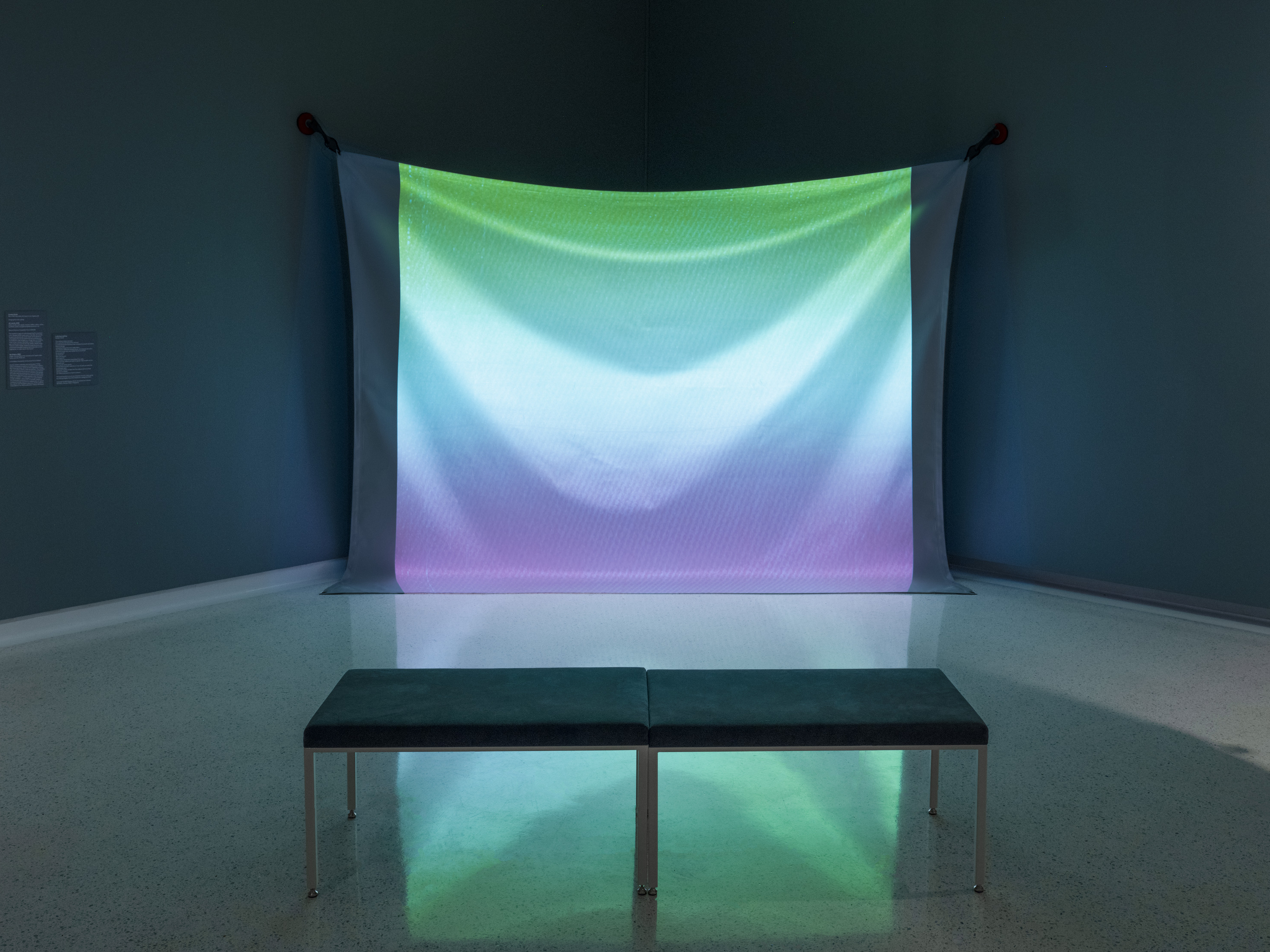
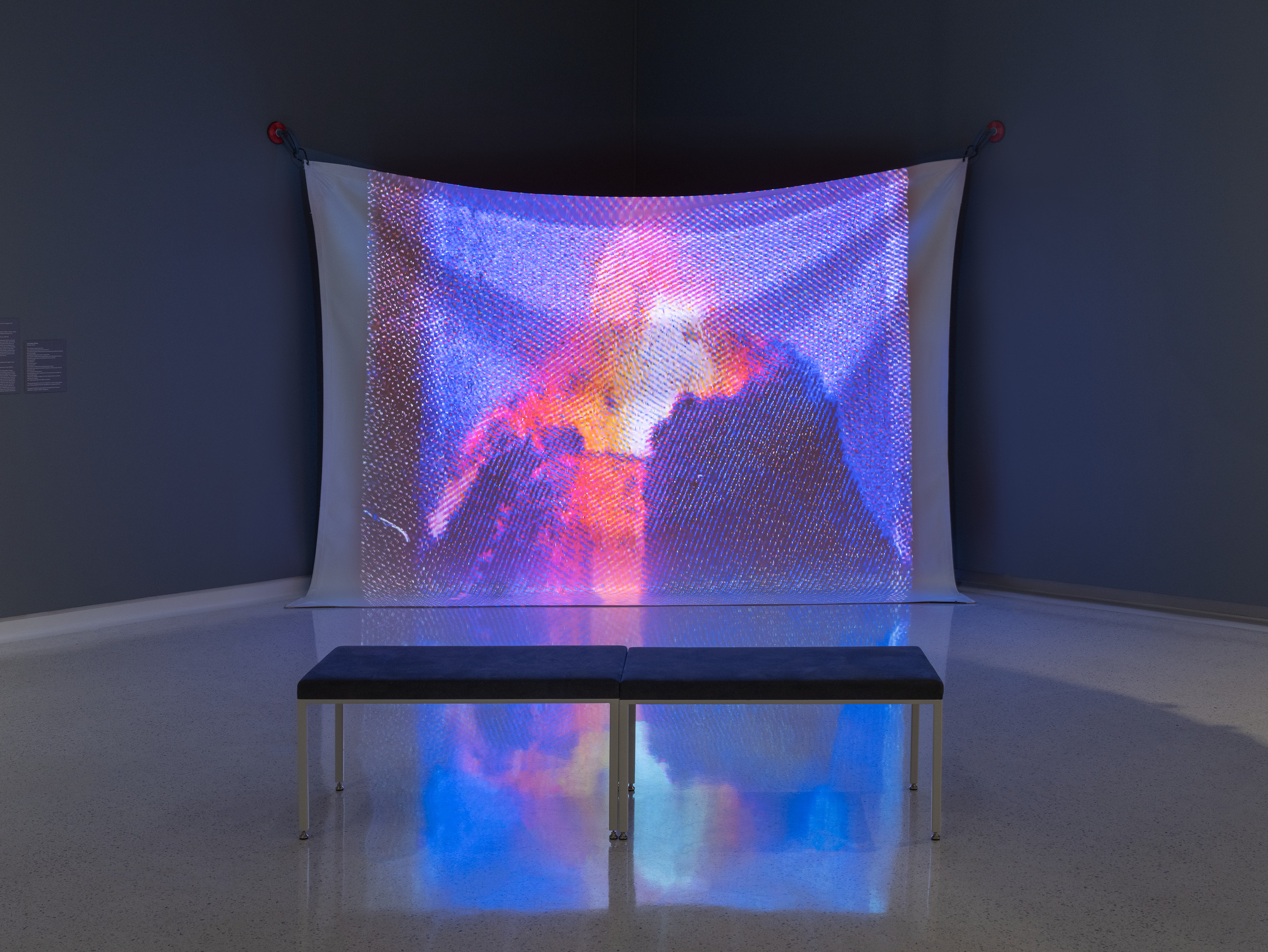
“New islands are being made as we speak! … This land, I declare, belongs to no one and because it belongs to no one it seems like the perfect home for people who have nowhere to go.”
—Cauleen Smith
(Please note, this is a time based media piece. Pictured here are two stills from the artwork.)
Prompts
- Grounding with the artwork: What do you observe in this artwork? What are you wondering about in this artwork?
- Emotion: What part of this media piece did you enter into? How has it changed? What stage of eruption are you in—pre-eruption, during eruption, or new life after?
- Loss: What causes external eruptions for you? What causes internal eruptions for you? Do you experience grief at any of those stages? What has a past eruption formed anew for you? How did it feel then? How do you think about it now?
- Future: What are the new islands in your life that you are dreaming about, imagining, forming?
Throughlines
- Catharsis
- Emotional ruptures
- Eruption
- Nature
- Activism
- New beginning
Wenitsyoh II, G. Peter Jemison
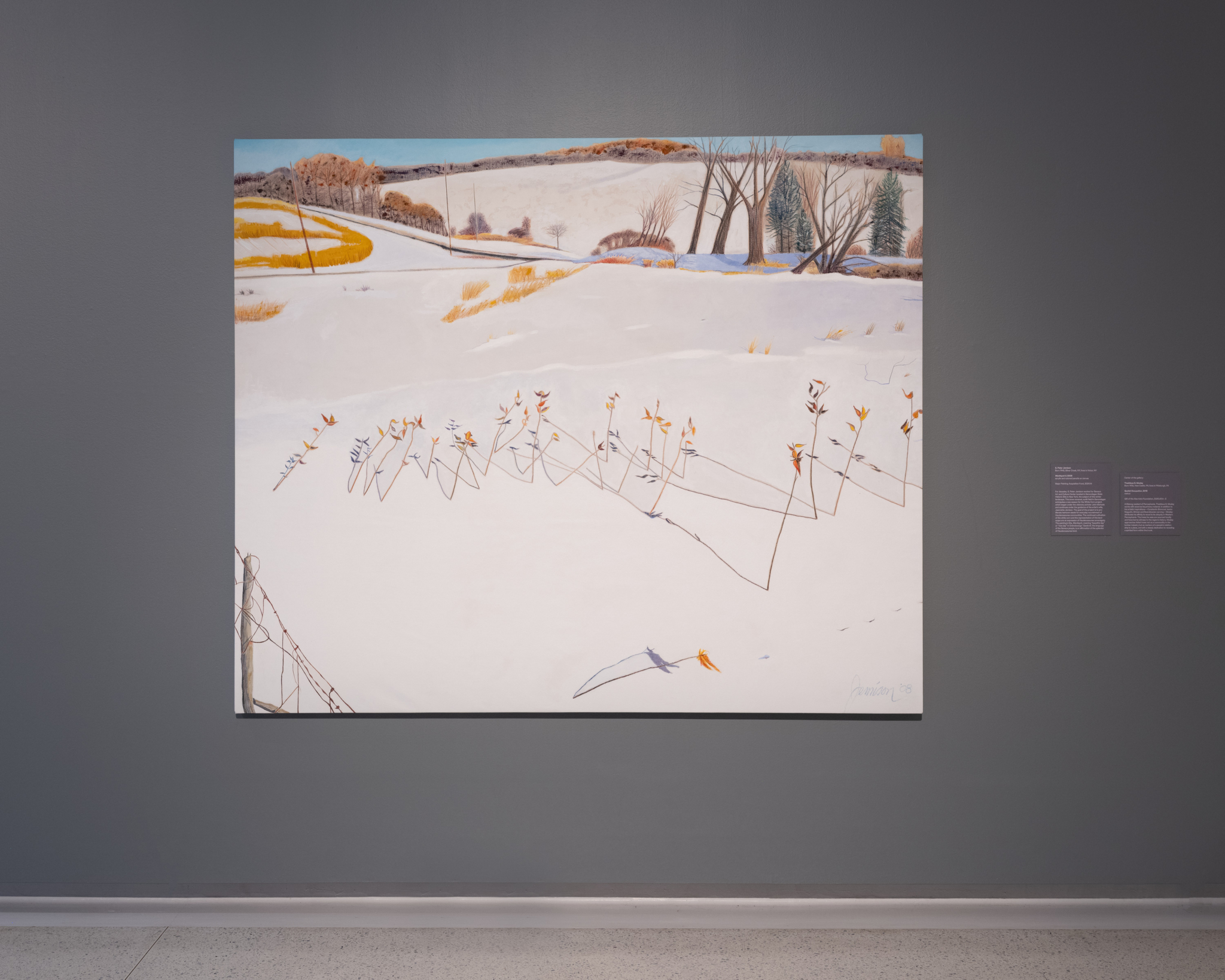
“I want you to experience the rest of the world just a bit cleaner or sharper than you did beforehand.”
“Through new juxtaposition our mind perceives an order, a meaning greater than our parts.”
—G. Peter Jemison
Prompts
- Grounding with the artwork: What do you observe in this artwork? What are you wondering about in this artwork?
- Safety: What season do you see in this painting? What phase of the season? Is there a particular season that eases your sense of safety, and why? Is there particular season that feels unsafe to you, and why?
- Emotion: What do you feel as one season closes and another starts? How do you experience this?
- Loss: What do you see of a season of the past? What do you see of the season to come? How does this feel?
- Future: What season are you in? What season are you entering? What are the elements of each season—temperature, growth, rest? What do you need when the seasons change?
Throughlines
- Winter
- Cold
- Winterscape
- Process
- Metamorphosis
- Catharsis
- Safe place
- Journey / travel
Colors of Grey, Thu Van Tran
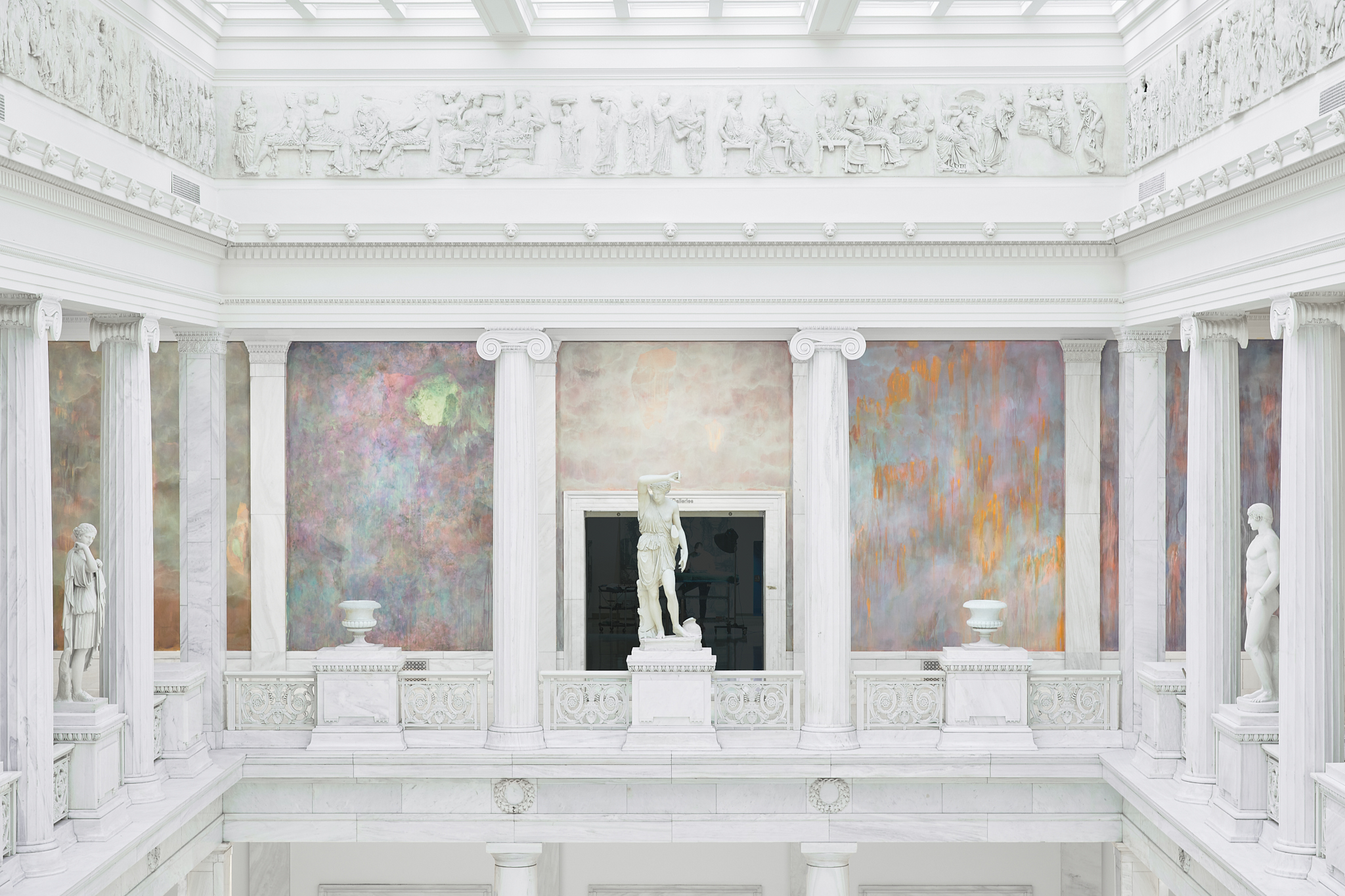
“We are made by stains. Perfect surfaces do not exist.”
—Thu Van Tran
(Please note, the artwork, Colors of Grey is an installation that they artist created directly on the walls in the Hall of Sculpture. The sculptures you see pictured, are not part of the artwork but are part of the space itself.)
Prompts
- Grounding with the artwork: What do you observe in this artwork? What are you wondering about in this artwork?
- Emotion: Write down the first color you see. Write down the first feeling you feel. Underneath that, write another feeling inside the first, associate a color with it, and repeat.
- Safety: To feel grounded, safe in your body, and envision the future, name a color that you see. Inhale to the count of 6, hold for 2, exhale to the count of 8. Repeat, naming a new color at the top of each breath.
Throughlines
- Eco
- Endings
- Beginnings
- Layers
- Peace
- Harmony
- Catharsis
Closing Reflection
As you complete this tour, take a moment to return to yourself. Notice your breath, your body, and any emotions that may have surfaced. There is no need to rush or resolve anything—simply acknowledge what is present.
You might consider writing in response to this prompt:
“What has this experience stirred in me? What do I want to carry forward, and what am I ready to release?”
If you are feeling overwhelmed, grounding practices such as placing your feet firmly on the floor, holding a comforting object, or stepping outside for fresh air can help you reconnect with the present moment.
You are not alone. You are worthy of safety, healing, and care. We are all in a healing process.
If you or someone you know is impacted by Domestic Violence, whether you are seeking safety, a supportive community, or hope, WC&S is here for your entire journey. Start by connecting with one of our trained domestic violence professionals by phone via our Hotline (24/7) | 412-687-8005 , Emergency Text Support (limited hours) | 412-744-8445, or online chat. Click here for more information.
If you would like to anonymously share any of your reflections for use in a collective poem, please do so here.
This experience was created in partnership with the Women’s Center & Shelter of Pittsburgh and the Governor’s Advisory Commission on Women.