The interview below, originally published in the If the word we: 59th Carnegie International catalogue, brings together artist collective Dang A Dang Radio with artist and writer Ami Lien. Dang A Dang Radio is a research and radio platform that archives and shares songs, poetry, and music connected to social movements for national liberation and democratic rights in the Philippines. Lien is one half of the artist duo Ami Lien and Enzo Camacho, whose multidisciplinary practice traces geopolitical relations while maintaining a critical eye toward the exploitation of land and labor in the context of the Philippines.
My own connection with Dang A Dang Radio began in the summer of 2024, when I traveled to the Philippines for two weeks of research, moving from Manila to Baguio amid passionate storms. There, I met three members of the collective. In the space of those conversations, an idea began to take root—one that would eventually grow into a project. Beginning this fall and continuing through the end of the 59th International, Dang A Dang Radio will produce four online radio episodes, each rooted in local research and developed with community organizations and collaborators across Manila, Baguio, Cebu, and Negros.
Growing out of live community-based events, the episodes unfold locally across the Philippines. Between them, field recordings from protest assemblies play on shuffle—a sonic archive of collective action called SOUND ASSEMBLY. Drawn from open-call submissions, these recordings capture what the collective describes as the “sonic political ambience of our time.”
—Danielle A. Jackson, Co-curator, 59th Carnegie International
Ami Lien: I’ll start with a simple question: How did you all initially come together to form this collective?
Dj Pisonet: It was in 2021, during the pandemic. At the time, it was very hard to organize physically and do face-to-face activities. Artists and organizers were trying to find ways to come together online, through Zoom events, concerts, and educational discussions.
Like most people, I was itching to do something and contribute while in quarantine. At the time, dj@URownRisk was working on his media archive, which included protest songs and materials from the 1970s. I thought, Why not do something with this? We can make a radio or podcast series that goes against Duterte and his fascism at the time.
dj@URownRisk: During 2021, it was also the time of the presidential election, of Ferdinand “Bongbong” Marcos Jr.’s campaign of returning the Marcos family to power.
There was an urge to do something because we were all in lockdown and because of Duterte’s disaster plan and militaristic response to the pandemic. I was able to revisit and slowly organize my personal collection of cassette tapes, CDs, and vinyl. It was also a conscious effort. I thought that maybe we could present protest music in a different platform, namely, people performing online, doing podcasts, and organizing concerts online.
At first, it was planned as a one-off program. But along the way, we thought that we should try to continue this platform and make it a research/archival outlet as well. At the same time, we want this project to serve as an organizing tool for cultural work.
Dang A Dang Radio (DADR) was a pandemic baby project. We did the first episode DIY: We prepared the playlist, Dj Pisonet did some writing for episode’s introduction and the station ID, Dj Mango volunteered to do the voice-over, and I recorded it and did some mixing and postproduction. And we decided to use Mixcloud as our platform of distribution.
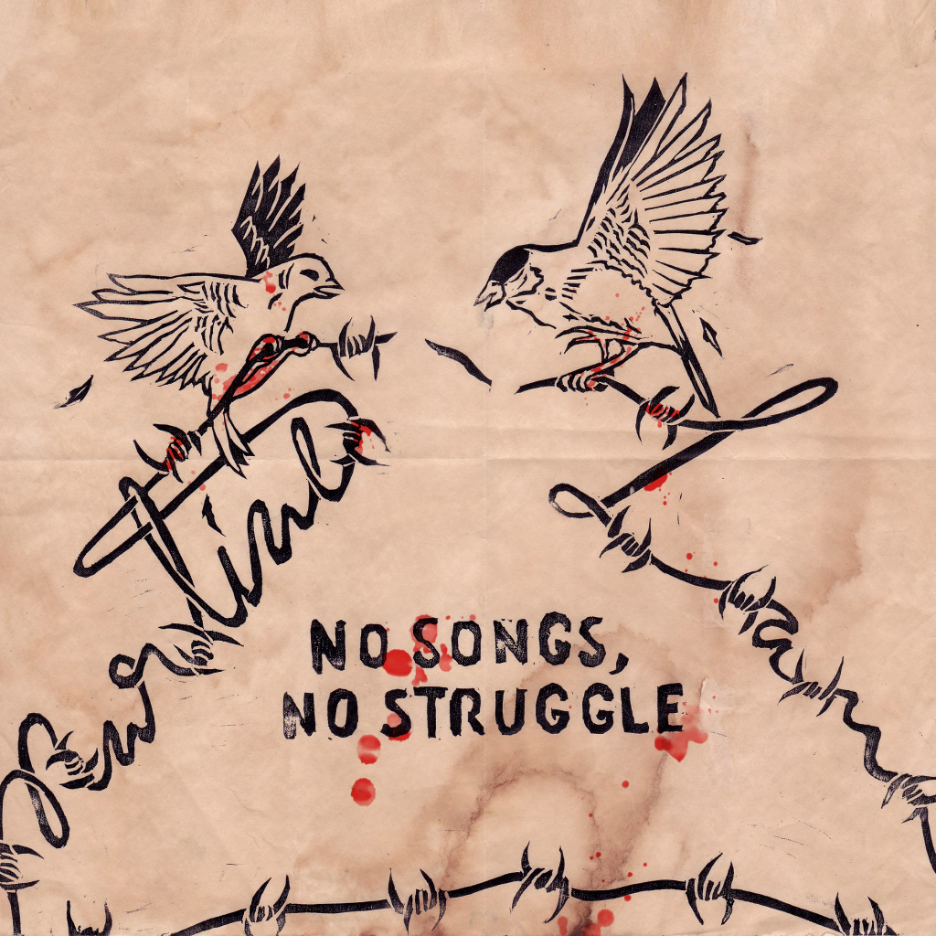
Dj Mango: When DADR started in 2021, the Philippines was in one of the world’s longest lockdowns. I was locked down with dj@URownRisk outside of Metro Manila while they were working on the playlist. I was always telling dj@URownRisk that I wanted to try doing voice-overs. I ended up voicing the first episode and helped lay out the cover art and episode guide. Prints Para Sa Bayan (Printmaking for the People) was an early collaborator with their linocut prints on the cover of the first three episodes.
Having started as a young activist in university-based organizations, I grew up with these protest songs that helped shape the politics I carry today. dj@URownRisk and I would talk about them often, and that’s how I became increasingly involved with Dang A Dang Radio.
I had always assumed I knew protest music based on what I grew up hearing. But through conversations with my DADR collaborators, I began to appreciate and explore not just songs but also the broader role of sound in protest movements and what’s happening in the Philippines.
Dj Pisonet: If I may add, DADR was also born out of a desire for more online platforms for protest music—a desire to listen to these songs beyond the streets—and also out of curiosity, like Dj Mango said. We often wondered if recordings existed of protest music we like. It’s that same curiosity when you look for your favorite songs on SoundCloud or YouTube, for instance.
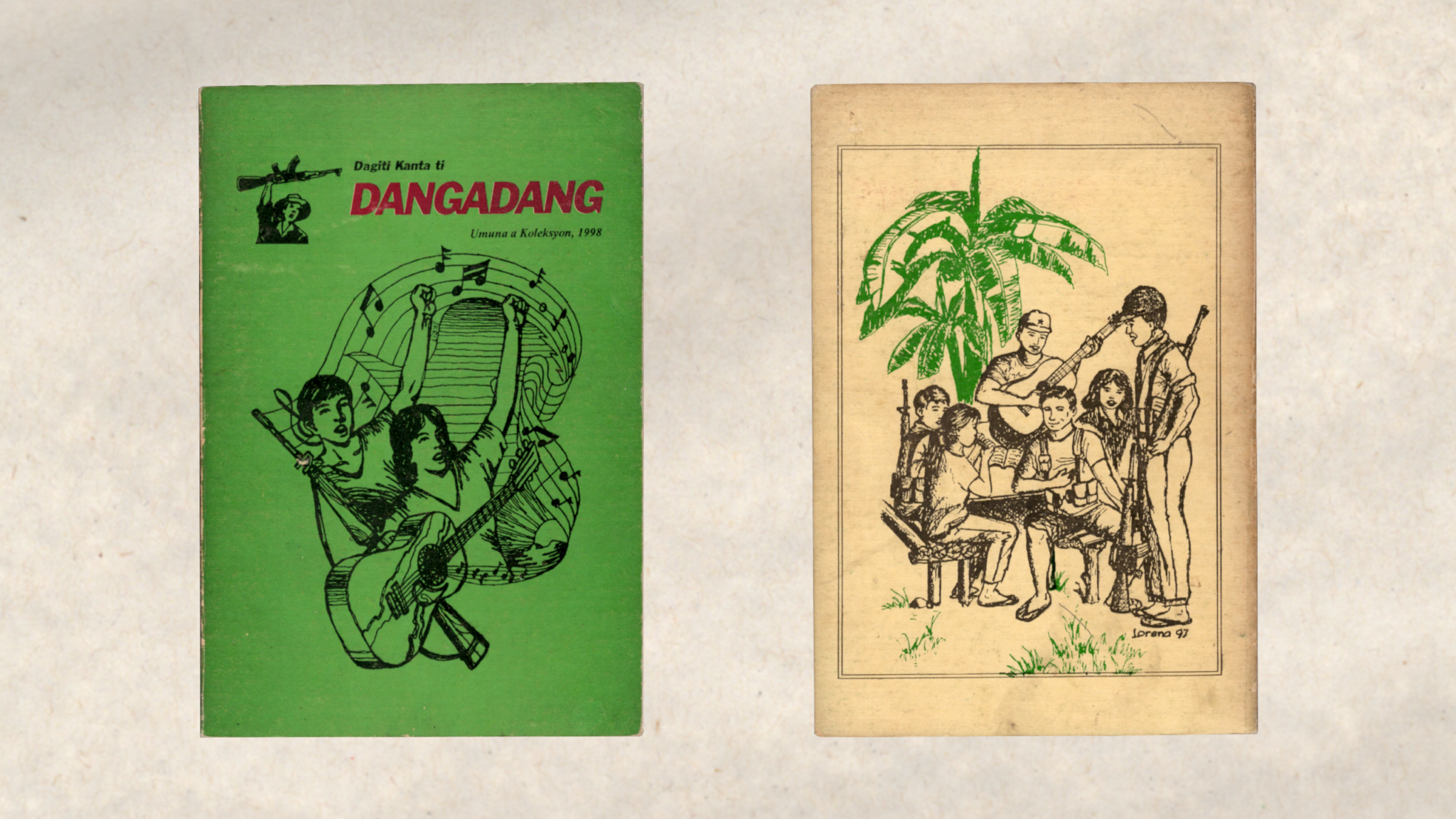
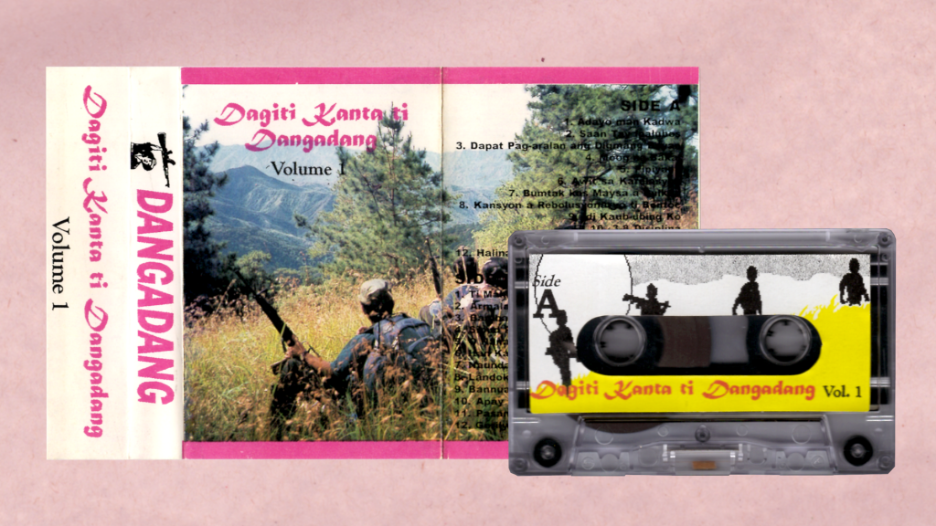
A lot of protest music is already available online, but not as widely as mainstream music. So there’s always this desire to look for more avenues for this revolutionary music. Dang A Dang Radio was also inspired by its namesake, the Dagiti Kanta ti Dangadang songbooks, which started this tradition of spreading protest music to the masses.
So far, there are four volumes of the Dangadang booklets. They succeeded in spreading revolutionary messages to the masses. We were inspired by that and wondered how we could achieve that same kind of art propaganda through more modern means like the internet, radio, and podcasting, which peaked during the pandemic.
Dj Land-i: I know Dj Pisonet and dj@URownRisk and Dj Mango from being involved in the experimental music scene back in the late 2000s to the late 2010s. During the pandemic, a lot of us got involved with progressive organizations. Later on, in 2022, I was invited to help record an episode called “No Songs, No Struggle,” which was released for Nusasonic Radio.
Coming from more of a sociological background, I’m a general cultural worker. I help organize, produce, and curate art projects with different kinds of artists. For me, the whole concept of having another cultural form of protest, such as songs, is also very important to archive and document, especially during the most recent elections where Marcos Jr. won; there was a campaign to censor, again, a lot of the materials produced during martial law.
AL: I’m sensing the urgency you felt to resist the rise of fascism during the pandemic. Could you share a little more about what was happening during these years? What did it feel like to live in the Philippines during the lockdown, and how did those conditions motivate this project?
Dj Pisonet: This was a time when a lot of fascism was happening through state orchestrated violence, such as the drug war initiated by Duterte himself, which killed tens of thousands of people living in poverty. And at the same time, there was also a lot of red-tagging, arrests, and murders in the countryside. Hundreds of peasants were killed. There was a strict militaristic approach to the COVID pandemic and lockdown, and the government was negligent about healthcare. They weren’t giving out free COVID tests. They weren’t giving out enough relief goods to people who were trapped in their homes, who had no access to basic needs like food and water.
Because of state violence, there was intense anger, which resulted in an energetic period of organizing. After the peak of the lockdown, people took to the streets to organize big mobilizations once they were allowed to go outside their homes. Under these conditions, Dang A Dang Radio was slowly forming.
Dj Mango: As all of this was unfolding, the return of the Marcos family was looming. Their two-decade dictatorship remains one of the darkest periods of Philippine history. The Marcos name and martial law carry the stain of political repression and poverty in the 1970s and 1980s. For years, the family had been steadily trying to rehabilitate their image. In 2022, Ferdinand “Bongbong” Marcos Jr. was elected president amid issues of fake news and fraud.
There was intense pushback from different fronts of cultural work trying to prevent another Marcos administration. Alongside Dang A Dang Radio are many micro archives and initiatives on memory work, engaging with history through film, ephemera, and photography, such as Project Gunita, Memory Project by the Concerned Artists of the Philippines, and the Philippine Labor Movement Archive. Bantayog ng mga Bayani, a monument, research center, and museum dedicated to heroes and martyrs of martial law, has been around since the 1990s.
This was the atmosphere in Metro Manila; outside the cities, the situation was even harsher. The drug war, red-tagging, and outright repression hit many communities with greater force. In 2018, the massacre of nine sugarcane workers in Sagay, Negros Occidental, was just the beginning in a series of killings of farmers, activists, and peasant advocates on the island. In the middle of the COVID lockdowns in 2021, the Bloody Sunday Massacre took place—a series of police and military operations leading to nine killings and the arrest of six activists in the Southern Luzon provinces of Batangas, Rizal, and Cavite.
AL: So you formed this collective to push back against the repressive conditions of the Philippine state during the pandemic. And you pooled your resources to distribute the music and sounds of protest in order to popularize them and renew their spirit. In a lot of your radio programs, you work with different mass organizations such as UMA (Unyon ng mga Manggagawa sa Agrikultura) and SAKA (Sama-samang Artista para sa Kilusang Agraryo). How do these collaborations work?
dj@URownRisk: Our second episode was a collaboration between UMA and SAKA; it was an online stream on Facebook. They came up with a selection of classic protest songs from the 1970s to the 2000s and invited some cultural workers and artists to reimagine, reinterpret, and remix the songs. It took place on the International Day of Action Against Peasant Killings in commemoration of the Sagay Massacre.
The dynamics of programming and collaborating with mass organizations and other initiatives are shaped by key conversations surrounding the particular struggles or issues we want to address. For example, Dang A Dang Radio would make a playlist concerning peasant and land issues, featuring songs that serve as the soundtrack to the conversation—a playlist that could help narrate the story of these struggles and allow listeners to better understand their historical and sociopolitical context.
Dj Land-i: Around the time I joined Dang A Dang Radio, I felt that it was a valuable initiative to make counternarratives against historical revisionism and to help safeguard some of the cultural forms that were documenting the resistance to the oppression that was happening before and currently.
The Philippine Labor Movement Archive (PLMA) had a monthlong exhibition at NO, which is a community gallery I help run with some colleagues in Teachers Village. They displayed the archive, including a series of photos from the 1970s to the 2020s depicting scenes from various protests across the Philippines.
For the public program, PLMA invited Dang A Dang Radio to collaborate with them, to present some songs from our own collection to reference the visual aspect of the exhibition. It was an hour-long program. And this is when we also started collaborating with Dj skywalk, who is now part of Dang A Dang Radio.
dj@URownRisk: That episode was our attempt as a radio to have a live audience, sort of like public broadcasts within a physical space with warm bodies. We wanted to approach the radio as an organizing tool, incorporating live performances and exhibitions, or simply a combination of different ideas and formats, which makes it open to experimentation. Therefore, the episode with the Philippine Labor Movement Archive was an attempt to have a conversation with the audience and the listeners.
AL: I’m really interested in your focus on the history of cultural protest in order to build collective resistance in the present, seeing as the Philippines has had such a long history of resistance against multiple colonial and imperial regimes, spanning hundreds of years. Would you like to share more context for the protest movements that you situate your cultural work within?
dj@URownRisk: We started to focus our research and curiosities on the protest and revolutionary music history of the First Quarter Storm (FQS), when local struggle was spurred by anti-Marcos and anti-US imperialist sentiment. We want to revisit and understand the sociopolitical and cultural context along with the stories of resistance that was happening at that time, which actually helps us appreciate the cultural value of these songs and the overall soundscape of the protest movement.
Dj Mango: I want to build on dj@URownRisk’s point about how we began with the context of the Marcos regime and how that renewed our interest in the 1970s, in what the earlier generation of activists had to say about their time, and why they wrote these songs. To understand this, we need to clarify which movements we are talking about and examine the political landscape that shaped this music.
The First Quarter Storm of 1970 was a period of massive youth and student protests responding to rising costs of living and growing authoritarianism. Students led anti-fascist and anti-imperialist protests, reflecting widespread frustration with continued US influence after centuries of colonization under Spain and Japan during the Second World War. At the time, the Philippines remained a strategic US military post during its war in Vietnam.
The decade was also defined by broad unities emerging across sectors: women’s organizations like MAKIBAKA (Makabayang Kilusan ng Bagong Kababaihan) (Patriotic Movement of New Women) were founded, and trade unions and peasant federations were expanding on a national scale. There was organizing among teachers, engineers, scientists, church workers, and artists.
Underlying these efforts were long-standing and fundamental problems of Philippine society: landlessness rooted in feudal land holdings from Spanish haciendas to the American plantations; the concentration of political and economic power in a small number of families; and continued US intervention in the Philippine economy, politics, and culture. These conditions shaped an organized national democratic movement working toward genuine land reform, national sovereignty, and democratic rights for all oppressed sectors.
Many of the songs we featured grew directly out of these struggles. Understanding this context shows why these songs continue to resonate today.
AL: By analyzing this history, we can clearly see that the problems of today are a continuation from the past; the same problems have persisted because the oppressive structures have remained.
This brings me to a question around that history: What is one of the oldest songs in your archive? Is it from around the time of the First Quarter Storm?
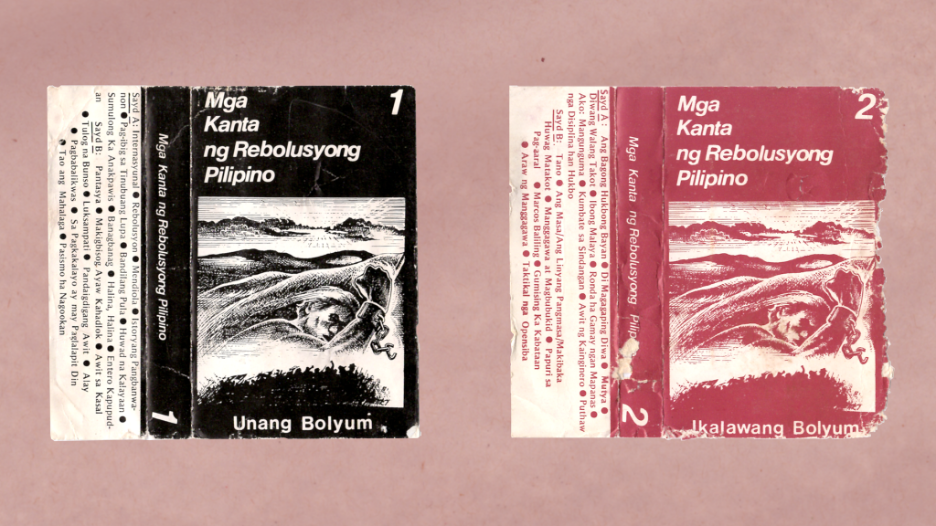
dj@URownRisk: Yes! In our research, we’re still mapping out the albums that were released or circulating among the public during that time. But so far, there are two albums on vinyl that are basically the oldest recordings we have in our collection. One was released in 1976 by Paredon Records: Philippines: Bangon! Arise! The other record, called Siklab: Mga Awitin ng Masang Pilipino, was donated to us and we are still figuring out some information related to this album.
The Philippines: Bangon! Arise! album includes the classic song “Ang Masa,” which had quotes from Mao translated into Tagalog: “The masses are the real heroes. They are the creators of history” / “from the masses, to the masses.” These lyrics became popular as part of the student movement of the FQS, and even up until today, this song is being performed in mobilizations and demonstrations. There were no recordings at the time, but since protest songs are easy to learn, they were easily performed and people were able to learn them by participating in rallies or attending educational and cultural discussions and forums. “Ang Masa” became a classic Tagalog protest anthem.
There are also some efforts to map out and give emphasis to the regional soundscape. For example, artists and cultural workers in Cebu are doing a survey of Visayan protest and revolutionary songs under martial law. Because some of these pieces were never recorded, they reached out to people who still remember the melodies and lyrics. Now younger cultural workers and artists are relearning and performing these songs, ensuring that they once again become part of the community’s collective memory and reaffirming the rich cultural history of the resistance movement.
AL: Your descriptions of the transmission of songs and the process of archiving sound incredible. On the one hand, the songs move in waves from person to person, through protests and gatherings, rather than recording or the radio. On the other hand, this archiving process involves gathering older generations with younger generations to listen to and reinterpret something that gets drawn out of someone’s living memory. Would you be able to share more anecdotes around this type of research and archiving?
Dj Mango: Early this year, Enzo Camacho asked me to look for the song “Mamumugon Sa Campo” by Teatro Obrero. Mamumugon is the Hiligaynon term for farmworker, and campo refers to the sugarcane plantations on Negros Island. I talked to former Teatro Obrero theater director Alejandro Deoma, and he said they were able to record this song in the 1990s. It came to be as activists and community organizers moved from one campo to another campo, giving out the same message in conversation with the farmworkers. That speech was then transformed into a song that resembles an actual conversation between an organizer and a peasant community or a farmworker. So there’s this line:
“Kauturan, kabatas bala kamo sa pagtulok / Kay mahimo ta man nga lutuson / Ang mga malupigon”
“Brothers and sisters, can you not see / That we too can resist / Those who oppress us?”
And that is how the song is written. It’s an actual organizer talking to a peasant worker.
AL: I love this call-and-response, the way this song is literally growing out of the movement that is building as it goes from plantation to plantation!
Dj Mango: And it’s amazing how that speech could have been the same speech they’ve been doing since the 1980s.
AL: You have to share the gospel many, many, many times over.
Dj Mango: The first episode has this beautiful kundiman or traditional Filipino ballad, “Jocelynang Baliwag,” interpreted by Susan Fernandez. It was historically celebrated as a “kundiman of the revolution,” believed to be a patriotic song of the Philippine Revolution against Spanish colonial rule. Recent historical analysis suggests that it was actually written later, in 1905, as a courtship song for Maria Josefa “Pepita” Tiongson y Lara by Isabelo de los Reyes, founder of the first labor union confederation in the Philippines. It is fascinating how a song can be perpetually listened to, performed, and studied.
AL: It has been so cool for me personally to learn through the radio shows about the breadth and variety of music and sound contributions to the movement. It’s alive and experimental, spanning different genres and formats.
I feel like this openness to experimentation is also reflective of the dynamism and experimentation required of the revolutionary process itself. In my understanding, Dang A Dang Radio pays homage to history and tradition and follows a correct revolutionary path forward. There’s a sense of holding the line, holding true to the messages of the people, and then there’s also this wild sense of play. Protest music is being exploded and going off in all different directions. Achieving a revolution also requires that we scientifically experiment with social relations with the aim of reaching a place we’ve never yet been to but toward which we collectively want to evolve.
I sense that this aspect of culture making for the revolution is something you might be interested in or making space for.
Dj Pisonet: I really like that idea. I also think a lot about the correlation of practice and principle. We’re talking about practice as cultural workers—how the practice is both executed and anchored in revolutionary theory. We’re trying to practice the freedoms that we want to attain in the future in all aspects, not only with cultural work but also with how we want to live psychologically and socially, and how we want to think and create as people, not just as artists.
I was reading a nice interview with the musician and activist Ericson Acosta, and he mentioned something about the Maoist principle of making art—that it advances not only the correct political line but also the form. So the principle basically says that there has to be a balance between advancing revolutionary ideals and aesthetics, and experimenting or being open and flexible to all forms so we can progress with how we create work and organize for the future.
Dj Land-i: I want to approach it through the poetics of using sound and music to distribute and disseminate resistance. First of all, I’m thinking about this term for a sound technique––amplification––where you boost the signal of something so that it becomes louder. In a way, this radio and archival project aims to amplify marginalized voices and stories that have not yet been told or are not in the mainstream.
Another aspect is thinking about sound as something that can pass through physical barriers or that is hard to control; once it’s out there, it’s kind of ever-present. In the same way, these songs, once you sing them as a collective body, the vibrations, the tonality, and the qualities of the sound-making become powerful enough to make people move. And by “move,” that could mean gumalaw in Filipino—to dance or to take action—and also kumilos—to participate in social movements.