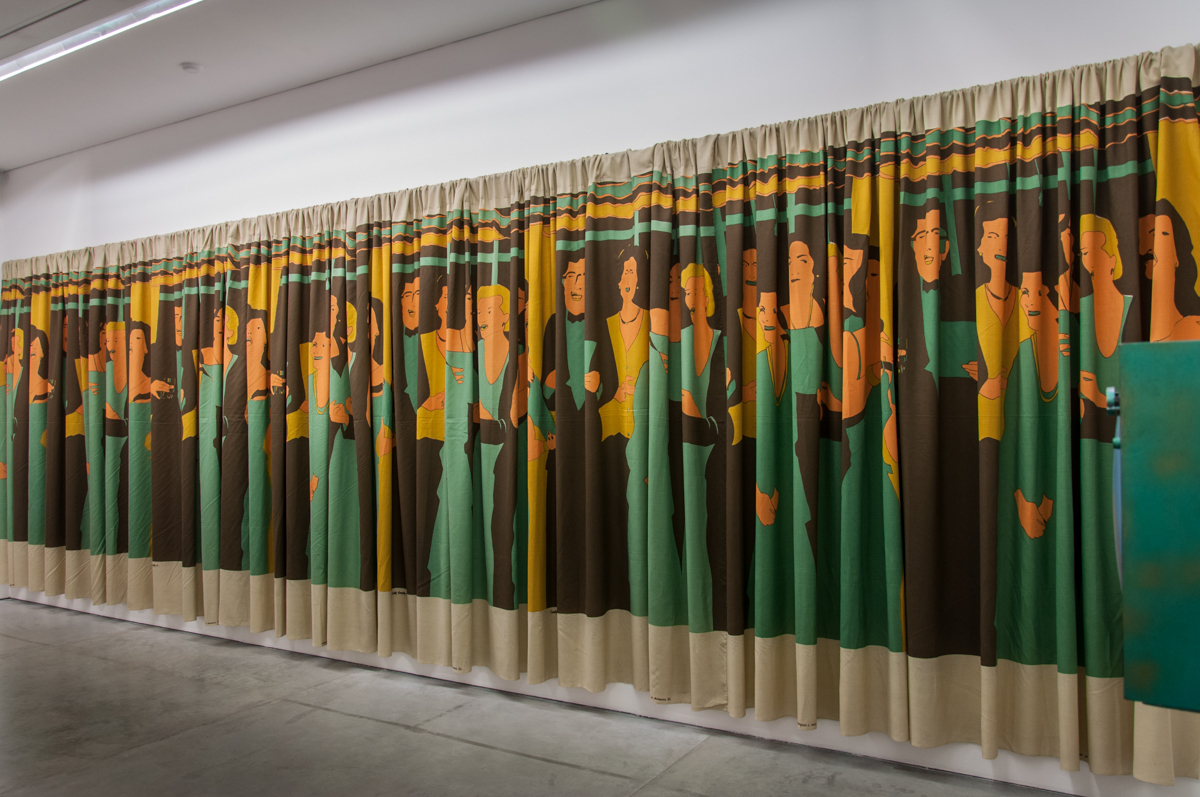
Beatriz González (born 1932, Bucaramanga, Colombia; died 2026, Bogotá, Colombia) is one of Colombia’s most influential living artists and a central figure in the history of contemporary art in Latin America. Since the early 1960s, she has developed a singular artistic language imbued with irony, a rigorous consideration of form, and a deep awareness of Colombia’s visual culture. Her work features found imagery and popular aesthetics, often using imagery circulating in mass media as well as ordinary objects and materials to reach everyday people. Over the decades, González’s practice has encompassed sculpture, painting, monumental tapestry, and installation to probe the intersections of art, history, and the conditions of a country in permanent conflict. During the 1980s and 1990s, she increasingly addressed themes of violence, loss, and collective mourning. González’s work has been presented in major international exhibitions including Another Energy: Power to Continue Challenging—16 Women Artists from Around the World, Mori Art Museum, Tokyo (2021–2022); the 8th Berlin Biennale (2014); documenta 14, Athens, Greece, and Kassel, Germany (2017); Radical Women: Latin American Art, 1960–1985 (Hammer Museum, Los Angeles, 2017; traveled to Brooklyn Museum and Pinacoteca de São Paulo); and the Venice Biennale and São Paulo Biennale in the 1970s.